Skip to content
OnMSFT.com
  • Home
  • About
  • Contact
  • News
  • How-to
  • Feature stories
  • Deals
  • Microsoft / office 365
  • Reviews
Menu
  • Home
  • About
  • Contact
  • News
  • How-to
  • Feature stories
  • Deals
  • Microsoft / office 365
  • Reviews
  1. Home
  2. News
  3. 1st major update to Microsoft’s Quantum Development kit brings Mac and Linux support

1st major update to Microsoft’s Quantum Development kit brings Mac and Linux support

Kareem Anderson Kareem Anderson
February 27, 2018
2 min read

While many in the tech industry are touting their ability to blend Artifical Intelligence and Machine Learning into their software and services, Microsoft has begun moving to another concept of grandeur in Quantum Computing.

During lengthy keynotes at WinHec and at Build 2017,  Microsft CEO Satya Nadella spoke ad nausem about the possibilities of Quantum Computing and it seems the company is inching closer to making its vision a reality.

Announced yesterday, Microsoft has updated its Quantum Developer Kit and expanded its support to include both Linux and Mac operating systems.

Today we’re announcing updates to our Quantum Development Kit, including support for macOS and Linux, additional open source libraries, and interoperability with Python. These updates will bring the power of quantum computing to even more developers on more platforms. At Microsoft, we believe quantum computing holds the promise of solving many of today’s unsolvable problems and we want to make it possible for the broadest set of developers to code new quantum applications.

Per the request of the developer community, Microsoft was excited to bring Q# building of quantum applications to the macOS and Linux as well as VS Code and quantum simulation for all. Other important update notes include:

  • Full open source license for our quantum development libraries and samples. In December, we shared the source code for our libraries to help developers understand how Q# constructs work. Many developers wanted to do more than just learn with that code; they wanted to re-use it in their own applications and contribute their own enhancements back to the Q# community. We think that’s a great idea, so we’ve open-sourced the libraries here.
  • Interoperability with the Python programming language. Many developers have existing libraries of code in Python so we wanted to give them easy access to that functionality from Q# without having to port anything. Available as a preview on Windows today, Python interoperability allows Q# code to call Python routines directly, and vice-versa.
  • Faster simulator performance. We’ve increased our quantum simulator performance by up to 4-5x, giving you a much faster testing and optimization loop, especially on simulations involving 20 or more qubits.

The update is available now via a download from Microsoft’s Quantum developer blog. According to several recent sessions on the company’s developer video blog Channel 9, Microsoft plans to take several opportunities to discuss Quantum Computing at this years developer conference, so we should expect to see similar announcements leading up to May.

Further reading: Build 2017, Linux, macOS, Microsoft, Python, Quantum Computing, WinHEC

Share this article:
Tags:
Build 2017 Linux macOS Microsoft Python Quantum Computing WinHEC
Previous Article How to turn your Android device into a “Microsoft Phone” Next Article US Supreme Court to hear Microsoft Ireland data case today

Related Articles

Samsung Display crosses 5 million QD-OLED monitor shipments as demand grows fast, with new panels and strong premium market expansion worldwide.

Samsung Display Ships 5 Million QD-OLED Monitor Panels in Four Years

April 9, 2026
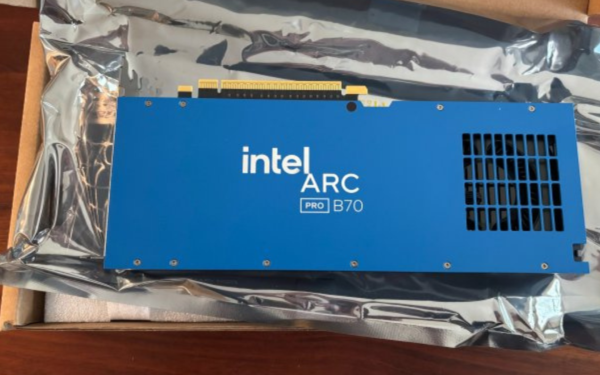
Intel Arc Pro B70 teardown reveals blower cooler design, PCB layout, firmware details, and early insights into Battlemage workstation GPU hardware.

Intel Arc Pro B70 Teardown Reveals Blower Cooler and Early Board Design Details

April 9, 2026
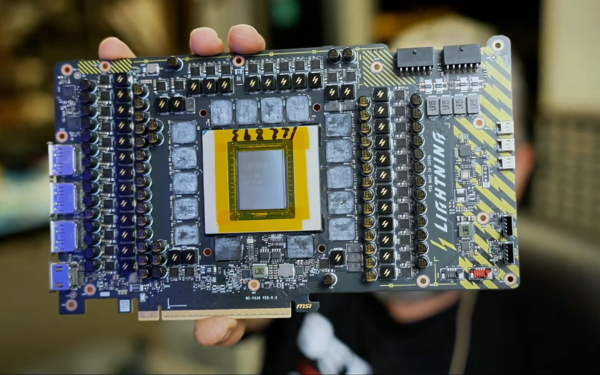
Users Modify RTX 5090 Lightning Z Hardware to Unlock MSI’s Restricted 2500W BIOS

Users Modify RTX 5090 Lightning Z Hardware to Unlock MSI’s Restricted 2500W BIOS

April 9, 2026

Leave a Comment Cancel reply

Your email address will not be published. Required fields are marked *

Recent Posts

  • Samsung Display Ships 5 Million QD-OLED Monitor Panels in Four Years
  • Intel Arc Pro B70 Teardown Reveals Blower Cooler and Early Board Design Details
  • Users Modify RTX 5090 Lightning Z Hardware to Unlock MSI’s Restricted 2500W BIOS
  • Intel Arc GPUs Finally Run Crimson Desert After Driver Update, But Issues Remain
  • NVIDIA N1 SoC Leak Shows First AI Laptop Motherboard With 128GB RAM

Recent Comments

  1. XxRIVTYxX on Intel Says It Tried to Help Before Crimson Desert Dropped Arc Support
  2. Gaurav Kumar on Chrome Prepares Nudge to ‘Move Tabs to the Side’ as Vertical Tabs Near Release
OnMSFT.com

The Tech News Site

Categories

  • Windows
  • Surface
  • Xbox
  • How-To
  • OnPodcast
  • Gaming
  • Edge
  • Teams

Recent Posts

  • Samsung Display Ships 5 Million QD-OLED Monitor Panels in Four Years
  • Intel Arc Pro B70 Teardown Reveals Blower Cooler and Early Board Design Details
  • Users Modify RTX 5090 Lightning Z Hardware to Unlock MSI’s Restricted 2500W BIOS
  • Intel Arc GPUs Finally Run Crimson Desert After Driver Update, But Issues Remain
  • NVIDIA N1 SoC Leak Shows First AI Laptop Motherboard With 128GB RAM

Quick Links

  • About OnMSFT.com
  • Contact OnMSFT
  • Join Our Team
  • Privacy Policy
© 2010–2026 OnMSFT.com LLC. All rights reserved.
About OnMSFT.comContact OnMSFTPrivacy Policy