
Intel has confirmed strong customer traction for its next-generation 18AP and 14A process nodes, with Tesla already committing to 14A for future chip production. This signals a major shift in Intel’s foundry ambitions as it pushes to compete with established players in advanced semiconductor manufacturing.
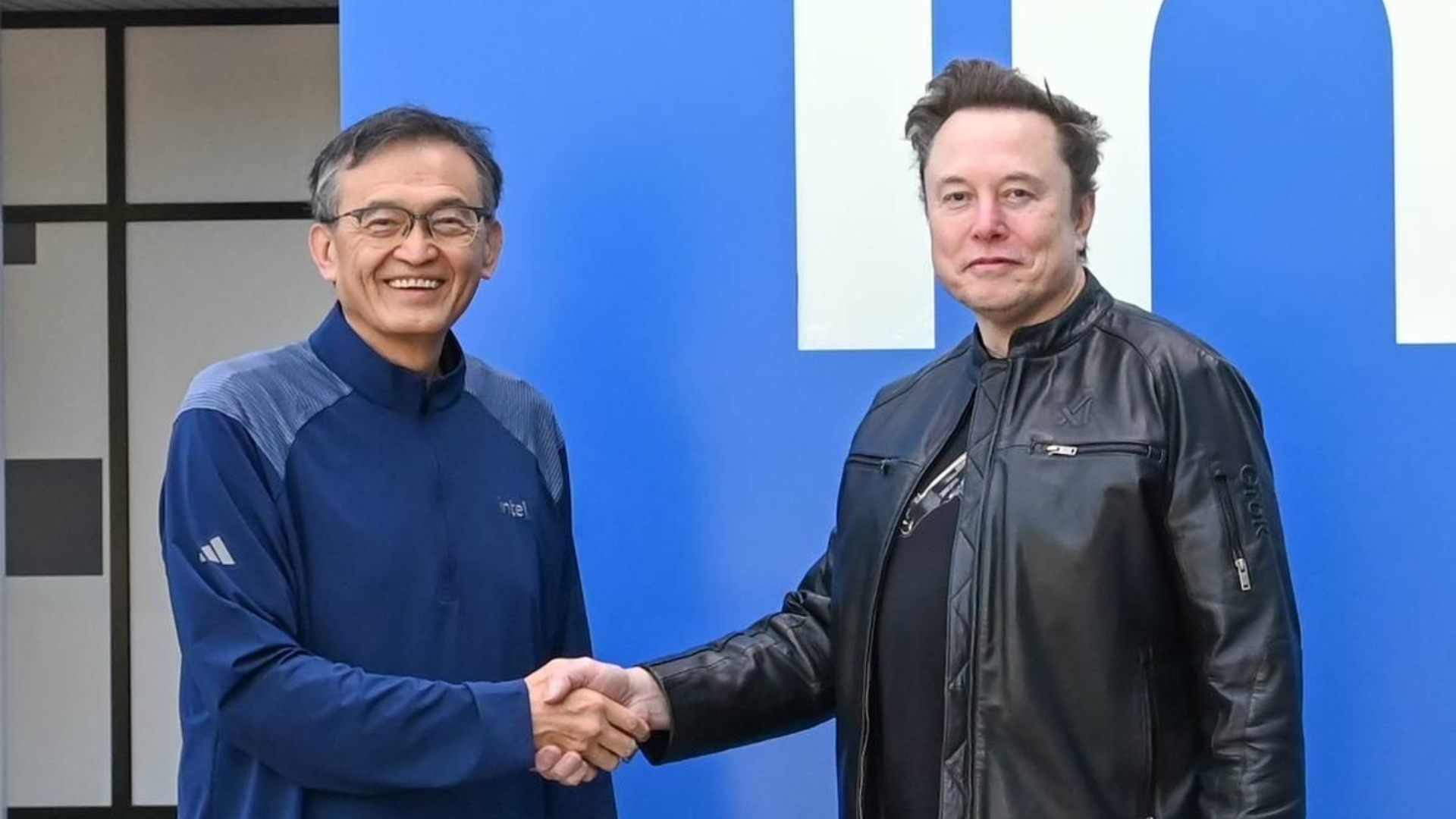
During the Q1 2026 earnings call, Intel CEO Lip-Bu Tan outlined how the company’s partnership with Elon Musk spans Tesla, SpaceX, and xAI through the TeraFab project, which aims to build large-scale chip production capacity and secure supply chains for advanced AI hardware.
“At a time when advanced wafer capacity is in short supply, this enables us to have better control over our supply chain. Intel has pioneered nearly every major innovation that has enabled dimensional scaling and high-volume manufacturing of silicon transistors over the last six decades. We have always been willing to take measured risks that have eventually paved the way for step-function improvements in transistor density, cost, power, and performance. As we look to continue challenging the status quo, I can think of no better partner than Elon Musk.”
— Lip-Bu Tan, Intel CEO
Tesla backs Intel 14A for future chips
Tesla plans to use Intel’s 14A node for its custom silicon, and Elon Musk described the technology as “state-of-the-art,” while also acknowledging that the process is still maturing and not ready for mass production yet, which aligns with Intel’s roadmap as TeraFab scales over time.
This matters because Tesla already works with foundries like TSMC and Samsung for chips such as AI5 and AI6, and adding Intel gives the company more control over supply and future design flexibility as demand for AI hardware keeps rising.
18AP and 14A show growing momentum
Intel says both 18AP and 14A are attracting strong external interest, and the company sees better early performance from 14A compared to 18A at a similar stage, especially in yield and overall maturity, which helps build confidence among customers evaluating the platform.
“On Intel 18AP and Intel 14A, we continue to be encouraged by our external engagements. Intel 14A maturity, yield, and performance are outpacing Intel 18A at a similar point in time, and we continue to develop PDKs with multiple customers actively evaluating the technology.”
— Lip-Bu Tan, Intel CEO
Intel also confirmed that customers are actively testing its process design kits, with version 0.5 already available and version 0.9 in development, which allows partners to finalize product plans, production volume, and capacity requirements.
More customer announcements expected
Intel expects additional partners to reveal their own deals over the next year, as the company prefers letting customers announce collaborations instead of naming them early, and this approach already played out with Tesla disclosing its involvement first.
“My style is under-promise, over-deliver, so we have no plan to announce the customer unless the customer wants to announce it, and we support that.”
— Lip-Bu Tan, Intel CEO
The Tesla agreement gives Intel a strong validation point for its foundry strategy, and with more design commitments expected between 2026 and 2027, the company is building steady momentum in a market where demand for advanced chip manufacturing continues to grow.