Skip to content
OnMSFT.com
  • Home
  • About
  • Contact
  • News
  • How-to
  • Feature stories
  • Deals
  • Microsoft / office 365
  • Reviews
Menu
  • Home
  • About
  • Contact
  • News
  • How-to
  • Feature stories
  • Deals
  • Microsoft / office 365
  • Reviews
  1. Home
  2. News
  3. Magic Leap CEO: Stereoscopic 3D will cause permanent brain damage, so avoid devices like HoloLens

Magic Leap CEO: Stereoscopic 3D will cause permanent brain damage, so avoid devices like HoloLens

Joseph Finney Joseph Finney
September 18, 2019
2 min read

Magic Leap CEO claims stereoscopic 3D will cause permanent brain damage, so avoid Hololens

New technology paradigms have always been surrounded by skepticism as well as excitement, but when there is competition between companies at the bleeding edge there will surely be plenty of misinformation. Recently the CEO of a Google backed start up Magic Leap has claimed Microsoft’s HoloLens could cause permanent brain damage and to no one’s surprise Magic Leap has a ‘better’ and ‘safer’ competing product. Without giving any details Rony Abovitz, the CEO of Magic Leap, says consumers should avoid HoloLens when it comes out and stick to products made with superior technology.

“There are a class of devices (see-through and non-see-through) called stereoscopic 3D. We at Magic Leap believe these inputs into the eye-brain system are incorrect — and can cause a spectrum of temporary and/or permanent neurologic deficits.” – Abovitz

Currently there are no hard details regarding the device to be made by Magic Leap, but the known details are as follows: the device will be augmented reality, and uses digital light-field signal technology to project images. The issue Magic Leap sees in HoloLens (other than the product being competition) is the use of stereoscopic 3D technology which is the current mainstream method for inducing the 3D effect in movie theaters and current 3D devices. Today there is no evidence stereoscopic 3D damages the brain in any way, but Magic Leap has already done the damage by presenting speculation as fact to consumers.

HoloLens will use stereoscopic 3d when it is released

Ironically Magic Leap and Microsoft are not in direct competition with these two devices. Microsoft made the point clear in their January 21st event that the big deal is not hardware but the software which has been developed to support holograms. Developers will be able to implement holographic elements into their apps and support next generation interactions through Universal Apps. These apps could run on Microsoft’s device or Magic Leap’s. The apparent clash no doubt comes from the heavy Google backing which Magic Leap receives, and the good chance Android will power their device and not Windows 10. This stands to be another example of Google trying to undercut Microsoft at every opportunity possible. Luckily it would seem Microsoft has a more mature product which is farther along in development and has already been proven to the press.

Further reading: Augmented Reality, Holograms, HoloLens, Magic Leap, Microsoft
Share this article:
Tags:
Augmented Reality Holograms HoloLens Magic Leap Microsoft
Previous Article Facebook, Google, Yahoo commit to ‘World IPv6 Day’ trial Next Article Pictastic app for Windows Phone receives update, now supports Instagram direct messages

Related Articles

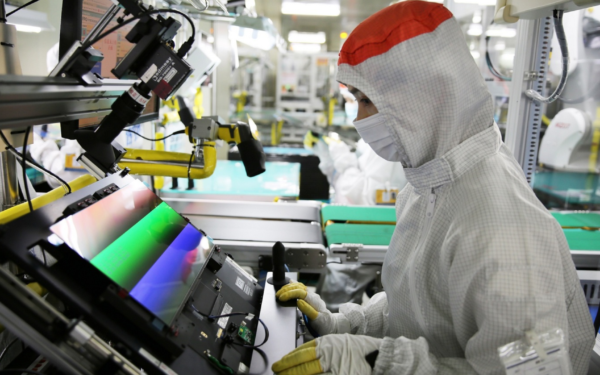
Samsung Display crosses 5 million QD-OLED monitor shipments as demand grows fast, with new panels and strong premium market expansion worldwide.

Samsung Display Ships 5 Million QD-OLED Monitor Panels in Four Years

April 9, 2026
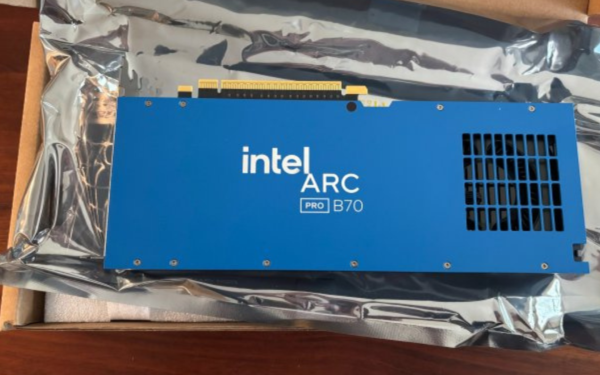
Intel Arc Pro B70 teardown reveals blower cooler design, PCB layout, firmware details, and early insights into Battlemage workstation GPU hardware.

Intel Arc Pro B70 Teardown Reveals Blower Cooler and Early Board Design Details

April 9, 2026
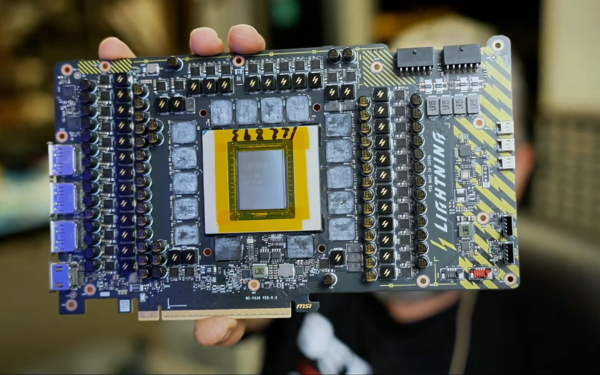
Users Modify RTX 5090 Lightning Z Hardware to Unlock MSI’s Restricted 2500W BIOS

Users Modify RTX 5090 Lightning Z Hardware to Unlock MSI’s Restricted 2500W BIOS

April 9, 2026

Leave a Comment Cancel reply

Your email address will not be published. Required fields are marked *

Recent Posts

  • Samsung Display Ships 5 Million QD-OLED Monitor Panels in Four Years
  • Intel Arc Pro B70 Teardown Reveals Blower Cooler and Early Board Design Details
  • Users Modify RTX 5090 Lightning Z Hardware to Unlock MSI’s Restricted 2500W BIOS
  • Intel Arc GPUs Finally Run Crimson Desert After Driver Update, But Issues Remain
  • NVIDIA N1 SoC Leak Shows First AI Laptop Motherboard With 128GB RAM

Recent Comments

  1. XxRIVTYxX on Intel Says It Tried to Help Before Crimson Desert Dropped Arc Support
  2. Gaurav Kumar on Chrome Prepares Nudge to ‘Move Tabs to the Side’ as Vertical Tabs Near Release
OnMSFT.com

The Tech News Site

Categories

  • Windows
  • Surface
  • Xbox
  • How-To
  • OnPodcast
  • Gaming
  • Edge
  • Teams

Recent Posts

  • Samsung Display Ships 5 Million QD-OLED Monitor Panels in Four Years
  • Intel Arc Pro B70 Teardown Reveals Blower Cooler and Early Board Design Details
  • Users Modify RTX 5090 Lightning Z Hardware to Unlock MSI’s Restricted 2500W BIOS
  • Intel Arc GPUs Finally Run Crimson Desert After Driver Update, But Issues Remain
  • NVIDIA N1 SoC Leak Shows First AI Laptop Motherboard With 128GB RAM

Quick Links

  • About OnMSFT.com
  • Contact OnMSFT
  • Join Our Team
  • Privacy Policy
© 2010–2026 OnMSFT.com LLC. All rights reserved.
About OnMSFT.comContact OnMSFTPrivacy Policy