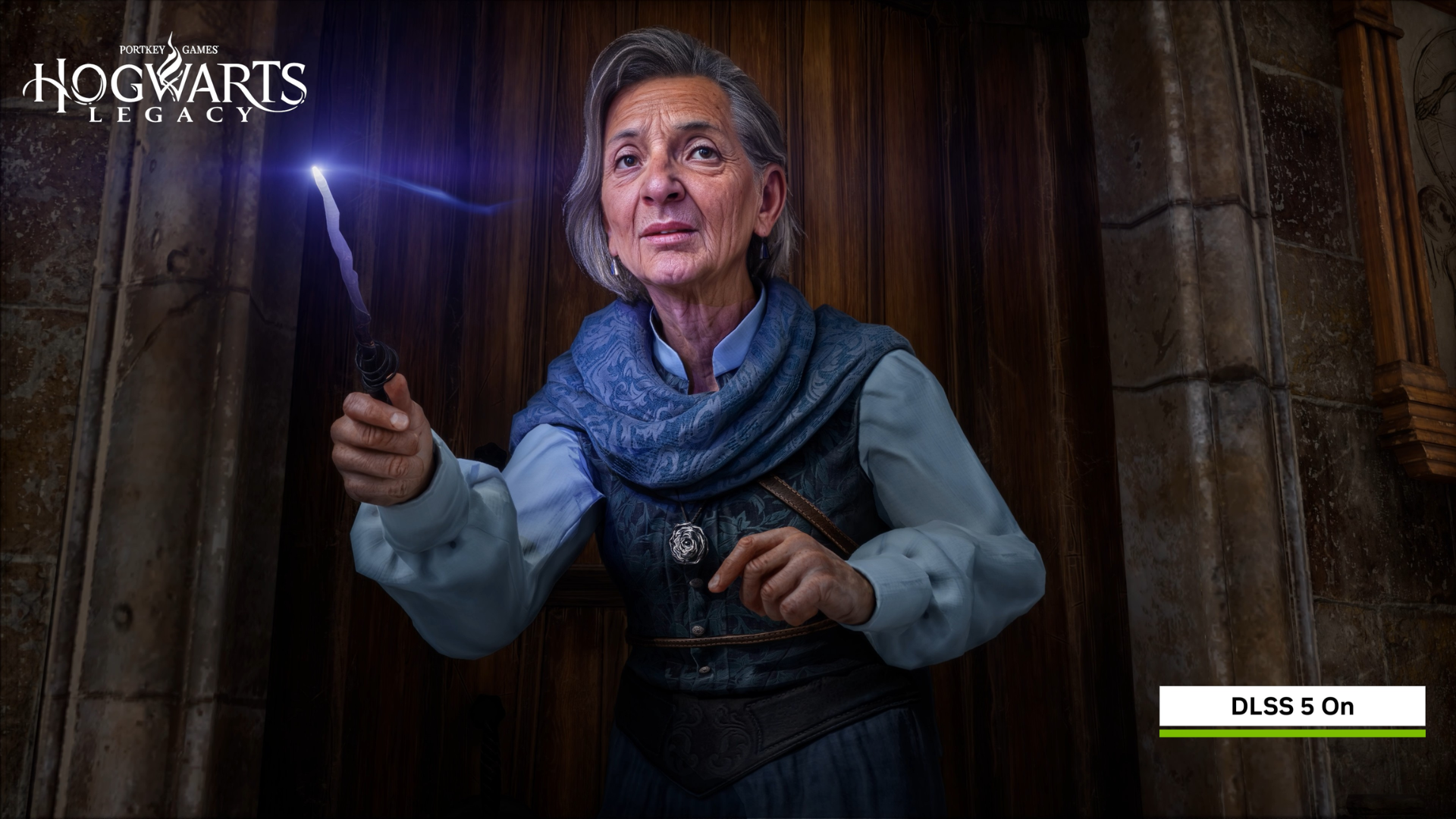

Daniel Vávra, the creative director behind Kingdom Come: Deliverance, has shared a clear view on NVIDIA’s DLSS 5 reveal at GTC 2026, and he believes the technology will move past early criticism and become a major tool for developers.
He pointed out that the current results may look slightly uncanny, but that phase will pass as the technology improves, and developers gain more control over how it works across different art styles and character models.
DLSS 5 could shift how games are rendered
Vávra sees DLSS 5 as more than a visual upgrade tool, and he expects it to handle tasks that currently rely on heavy rendering techniques like ray tracing.
“I can imagine in the future devs will be able to train this tech for a particular art style or specific people’s faces, and it might replace expensive raytracing, etc. This is just a little uncanny beginning. No way haters will stop this. It’s way more than a soap opera effect every TV has when you turn motion smoothing on.”
He also made it clear that criticism will not slow adoption, and he compared early reactions to common pushback seen with new display technologies.
NVIDIA confirms flexible art style support
Jensen Huang has already addressed one of the biggest concerns around DLSS 5, which is its ability to move beyond photorealism and support different visual styles.
“DLSS 5 also lets, because the system is open, you could train your own models to determine, and you could even, in the future, prompt it. You know, I want it to be a toon shader. I want it to look like this kinda, you know, so you can give it even an example. And it would generate in the style of that, all consistent with the artistry. All of that is done for the artist, so that they can create something that is more beautiful, but still in the style that they want. They want the generative models to generate the opposite of photo-realistic. Yeah, it’ll do that too. And so it’s just yet another tool.”
This directly supports the idea that DLSS 5 will not stay limited to realism, and instead gives artists more control over how games look.
Some developers still oppose the technology, especially after a rough first impression during its reveal, but the focus now shifts to refining edge cases and improving developer tools rather than stepping away from the project.