Skip to content
OnMSFT.com
  • Home
  • About
  • Contact
  • Windows
  • Surface
  • Xbox
  • How-To
  • OnPodcast
  • Edge
  • Teams
  • Gaming
Menu
  • Home
  • About
  • Contact
  • Windows
  • Surface
  • Xbox
  • How-To
  • OnPodcast
  • Edge
  • Teams
  • Gaming
  1. Home
  2. News
  3. Microsoft talks about ReFS in Windows Server 8, is a newly engineered file system

Microsoft talks about ReFS in Windows Server 8, is a newly engineered file system

Ron Ron
October 13, 2019
2 min read

In a new Building Windows 8 blog post, we learn about Microsoft’s plans for the new Resilient File System (ReFS) in Windows Server 8 and how this new file system is engineered for a new generation of storage technology.

“Today, NTFS is the most widely used, advanced, and feature rich file system in broad use. But when you’re reimagining Windows, as we are for Windows 8, we don’t rest on past successes, and so with Windows 8 we are also introducing a newly engineered file system. ReFS, (which stands for Resilient File System), is built on the foundations of NTFS, so it maintains crucial compatibility while at the same time it has been architected and engineered for a new generation of storage technologies and scenarios,” Microsoft states in an official blog post.

ReFS will inherit features from the NTFS file system such as BitLocker encryption, access-control lists for security, USN journal, change notifications, symbolic links, junction points, mount points, reparse points, volume snapshots, file IDs, and oplocks. On top of that, ReFS will contain the following new features, in conjunction with Storage Spaces:

  • Metadata integrity with checksums
  • Integrity streams providing optional user data integrity
  • Allocate on write transactional model for robust disk updates (also known as copy on write)
  • Large volume, file and directory sizes
  • Storage pooling and virtualization makes file system creation and management easy
  • Data striping for performance (bandwidth can be managed) and redundancy for fault tolerance
  • Disk scrubbing for protection against latent disk errors
  • Resiliency to corruptions with “salvage” for maximum volume availability in all cases
  • Shared storage pools across machines for additional failure tolerance and load balancing

According to Microsoft, the company will implement ReFS in a “staged evolution of the feature” which pretty much means that we will first see it as a storage system for Windows Server 8, then as storage for clients, and then ultimately as a boot volume. Microsoft states that this is the same approach used with previous file system introduction.


Further reading: Microsoft, Windows 8

Share this article:
Tags:
Microsoft Windows 8
Previous Article What makes up a Windows 8 certified device Next Article Office 365 has 10 top tools to help you stick to your New Year’s resolutions

Related Articles

Tencent steps in to support OpenClaw after creator complaints

March 17, 2026

Installing Web Apps in Chrome May Soon Take More Than One Click

March 17, 2026
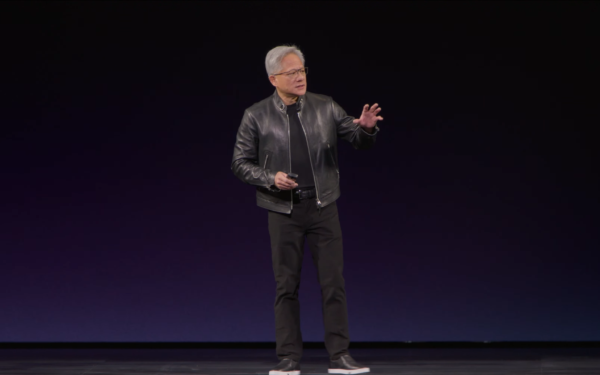
Nvidia CEO Jensen Huang says demand for Blackwell and Rubin AI chips could reach $1 trillion as AI infrastructure spending grows rapidly.

Nvidia CEO Jensen Huang sees $1 trillion demand for Blackwell and Rubin AI chips

March 16, 2026

Leave a Comment Cancel reply

Your email address will not be published. Required fields are marked *

Recent Posts

  • Tencent steps in to support OpenClaw after creator complaints
  • Installing Web Apps in Chrome May Soon Take More Than One Click
  • Nvidia CEO Jensen Huang sees $1 trillion demand for Blackwell and Rubin AI chips
  • Nvidia introduces DLSS 5 to improve game realism with generative AI
  • Dictionary Publisher Files Copyright Lawsuit Against OpenAI

Recent Comments

No comments to show.
OnMSFT.com

The Tech News Site

Categories

  • Windows
  • Surface
  • Xbox
  • How-To
  • OnPodcast
  • Gaming
  • Edge
  • Teams

Recent Posts

  • Tencent steps in to support OpenClaw after creator complaints
  • Installing Web Apps in Chrome May Soon Take More Than One Click
  • Nvidia CEO Jensen Huang sees $1 trillion demand for Blackwell and Rubin AI chips
  • Nvidia introduces DLSS 5 to improve game realism with generative AI
  • Dictionary Publisher Files Copyright Lawsuit Against OpenAI

Quick Links

  • About OnMSFT.com
  • Contact OnMSFT
  • Join Our Team
  • Privacy Policy
© 2010–2026 OnMSFT.com LLC. All rights reserved.
About OnMSFT.comContact OnMSFTPrivacy Policy