Skip to content
OnMSFT.com
  • Home
  • About
  • Contact
  • Windows
  • Surface
  • Xbox
  • How-To
  • OnPodcast
  • Edge
  • Teams
  • Gaming
Menu
  • Home
  • About
  • Contact
  • Windows
  • Surface
  • Xbox
  • How-To
  • OnPodcast
  • Edge
  • Teams
  • Gaming
  1. Home
  2. News
  3. Microsoft granted a patent for emotion-sensitive glasses – onmsft.com

Microsoft granted a patent for emotion-sensitive glasses – onmsft.com

Sean Cameron Sean Cameron
April 29, 2015
2 min read

Microsoft

Although Google Glass can be considered an unequivocal failure in most regards, Google got one thing right, the basic shape. Although the implementation was botched, the ‘glasses’-shaped wearable is expected to become a popular form in the future.

Adding credence to this idea, Microsoft has been granted a patent for a new wearable device, a pair of glasses that can detect emotions, as reported on VentureBeat. Through advanced facial recognition technology, the device will theoretically be able to detect the user’s emotional response to whatever they are looking at.

Once the response has been detected, context will be added for the given situation. For example, if the device detects a negative response to whatever you are watching on TV, it can pass this information on to help aggregate and curate content to suit your needs in the moment and provide more accurate recommendations.

The device also works in the other direction, helping the user identify the emotional response of whoever they are interacting with, either in a crowd or in a one-to-one situation.

If it ever goes into production, this could potentially be a dream come true for marketing teams around the globe. Given that the average human brain is highly sophisticated in its interpretation of others around it, given that we have evolved as ‘pack’ animals, the utility of this device could potentially be quite limited in its implementation beyond marketing.

Microsoft

Of course there is a further potential use, one that is easily overlooked. This device could act as something of a social crutch for those who have difficulties communicating. Conversation can often be difficult to interpret, especially for many on the Autism spectrum, if such a device could provide cues and help them to adapt, life could potentially become a little easier in some regards for these individuals (of course this is all theoretical).

Expect this tech to hit the likes of the Kinect-enabled Xbox, among other devices, in the far future. Though not confirmed, it is a very strong fit.

What use do you see for this technology? Let us know in the comments below.
 

Share This Post:

Share this article:
Tags:
Microsoft Research
Previous Article Windows 10 build 10102 zh-CN has leaked onto the web (Now with en-US) – onmsft.com Next Article Watch it right here: Microsoft Build 2015 Day 1 keynote on-demand | On MSFT

Related Articles

Nvidia CEO Jensen Huang says demand for Blackwell and Rubin AI chips could reach $1 trillion as AI infrastructure spending grows rapidly.

Nvidia CEO Jensen Huang sees $1 trillion demand for Blackwell and Rubin AI chips

March 16, 2026
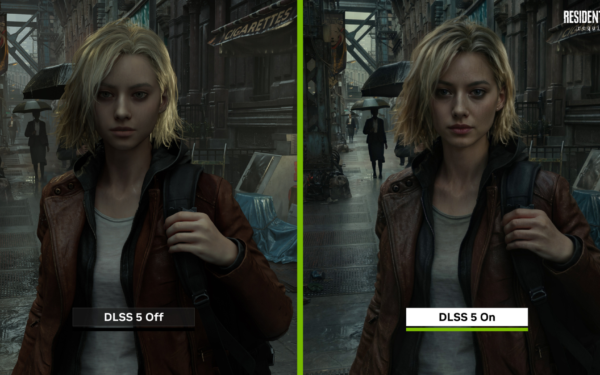
Nvidia introduces DLSS 5 to improve game realism with generative AI

Nvidia introduces DLSS 5 to improve game realism with generative AI

March 16, 2026
Dictionary Publisher Files Copyright Lawsuit Against OpenAI

Dictionary Publisher Files Copyright Lawsuit Against OpenAI

March 16, 2026

Leave a Comment Cancel reply

Your email address will not be published. Required fields are marked *

Recent Posts

  • Nvidia CEO Jensen Huang sees $1 trillion demand for Blackwell and Rubin AI chips
  • Nvidia introduces DLSS 5 to improve game realism with generative AI
  • Dictionary Publisher Files Copyright Lawsuit Against OpenAI
  • Shopify exec says AI shopping agents are the future of e-commerce
  • WhatsApp beta introduces guest chats for messaging without an account

Recent Comments

No comments to show.
OnMSFT.com

The Tech News Site

Categories

  • Windows
  • Surface
  • Xbox
  • How-To
  • OnPodcast
  • Gaming
  • Edge
  • Teams

Recent Posts

  • Nvidia CEO Jensen Huang sees $1 trillion demand for Blackwell and Rubin AI chips
  • Nvidia introduces DLSS 5 to improve game realism with generative AI
  • Dictionary Publisher Files Copyright Lawsuit Against OpenAI
  • Shopify exec says AI shopping agents are the future of e-commerce
  • WhatsApp beta introduces guest chats for messaging without an account

Quick Links

  • About OnMSFT.com
  • Contact OnMSFT
  • Join Our Team
  • Privacy Policy
© 2010–2026 OnMSFT.com LLC. All rights reserved.
About OnMSFT.comContact OnMSFTPrivacy Policy