
NVIDIA continued the conversation around neural rendering after introducing DLSS 5 at GTC 2026, but this time the focus shifted toward practical improvements inside the rendering pipeline rather than just final image processing, and that changes how developers and gamers should look at AI in graphics.
The company explained that DLSS 5 is only one part of a broader neural rendering approach, where machine learning is not limited to upscaling or frame generation, but instead works directly inside the pipeline to handle tasks like texture decoding, material evaluation, and memory optimization in a more efficient way.
Neural rendering moves inside the pipeline
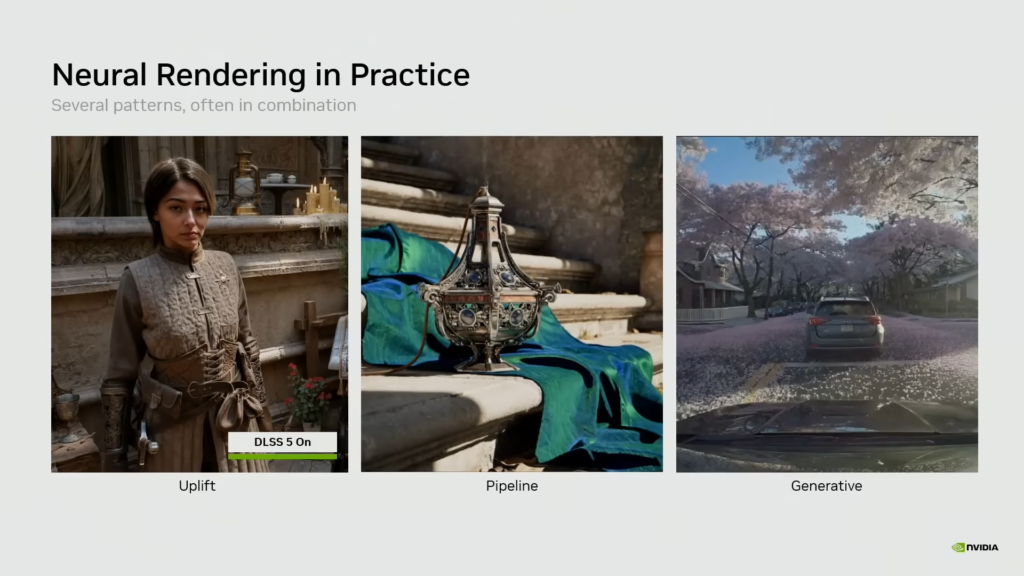
Instead of relying on a single large AI model applied at the end of rendering, NVIDIA is now pushing smaller neural networks that handle specific tasks during rendering, which allows the system to reduce memory usage and processing load without changing the final artistic output.
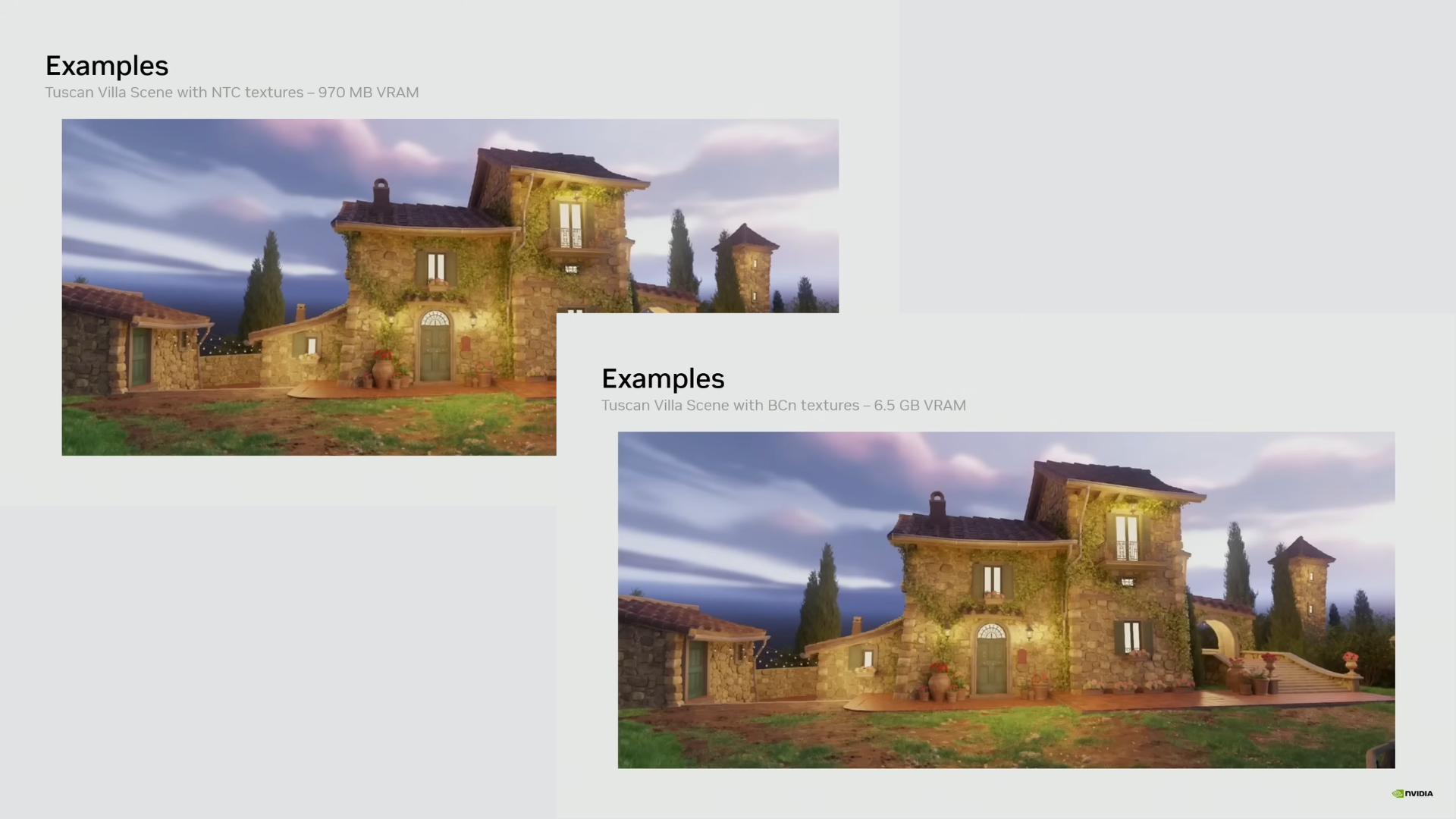
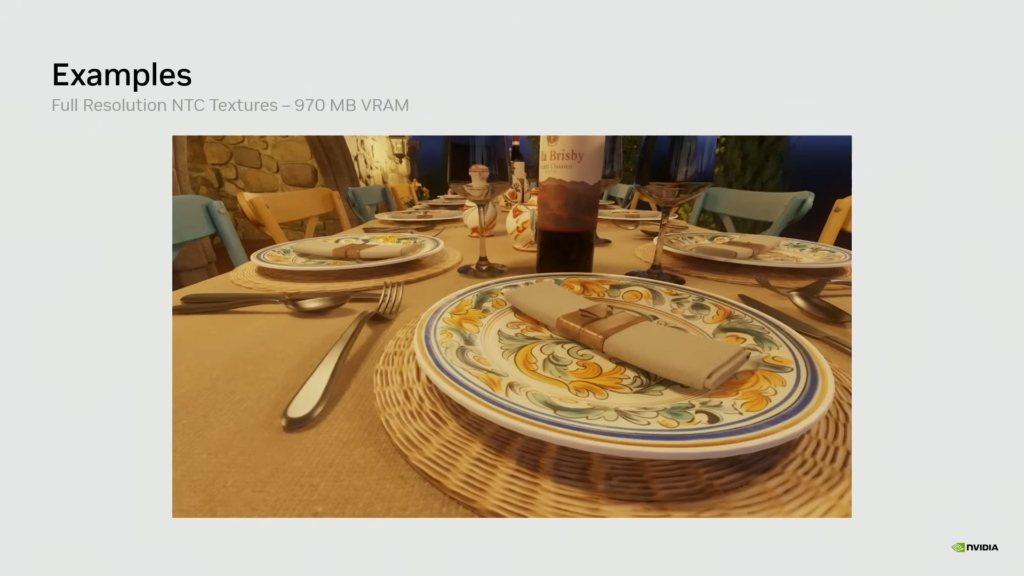
A clear example comes from Neural Texture Compression, where NVIDIA showed its Tuscan Wheels scene dropping from around 6.5GB of VRAM to just 970MB while maintaining image quality close to the original, and at the same memory level it even preserved more detail compared to traditional compression methods.
This kind of improvement directly affects real-world gaming, since it reduces game sizes, speeds up downloads, and allows developers to use more detailed assets on the same hardware without increasing system requirements.
Neural materials improve performance without changing visuals
NVIDIA also demonstrated Neural Materials, which compress complex material data into a smaller format and decode it using lightweight neural networks, reducing a setup with 19 channels down to eight while improving rendering speed between 1.4x and 7.7x in test scenarios.
This approach focuses on efficiency rather than visual changes, which helps address concerns raised after DLSS 5 sparked debate about AI potentially altering game visuals or artistic intent.
NVIDIA’s latest direction shows a clearer benefit for gamers, since improving memory usage, performance, and asset quality delivers practical gains without interfering with how games are designed to look, and that shift makes neural rendering easier to accept in real-world gaming.