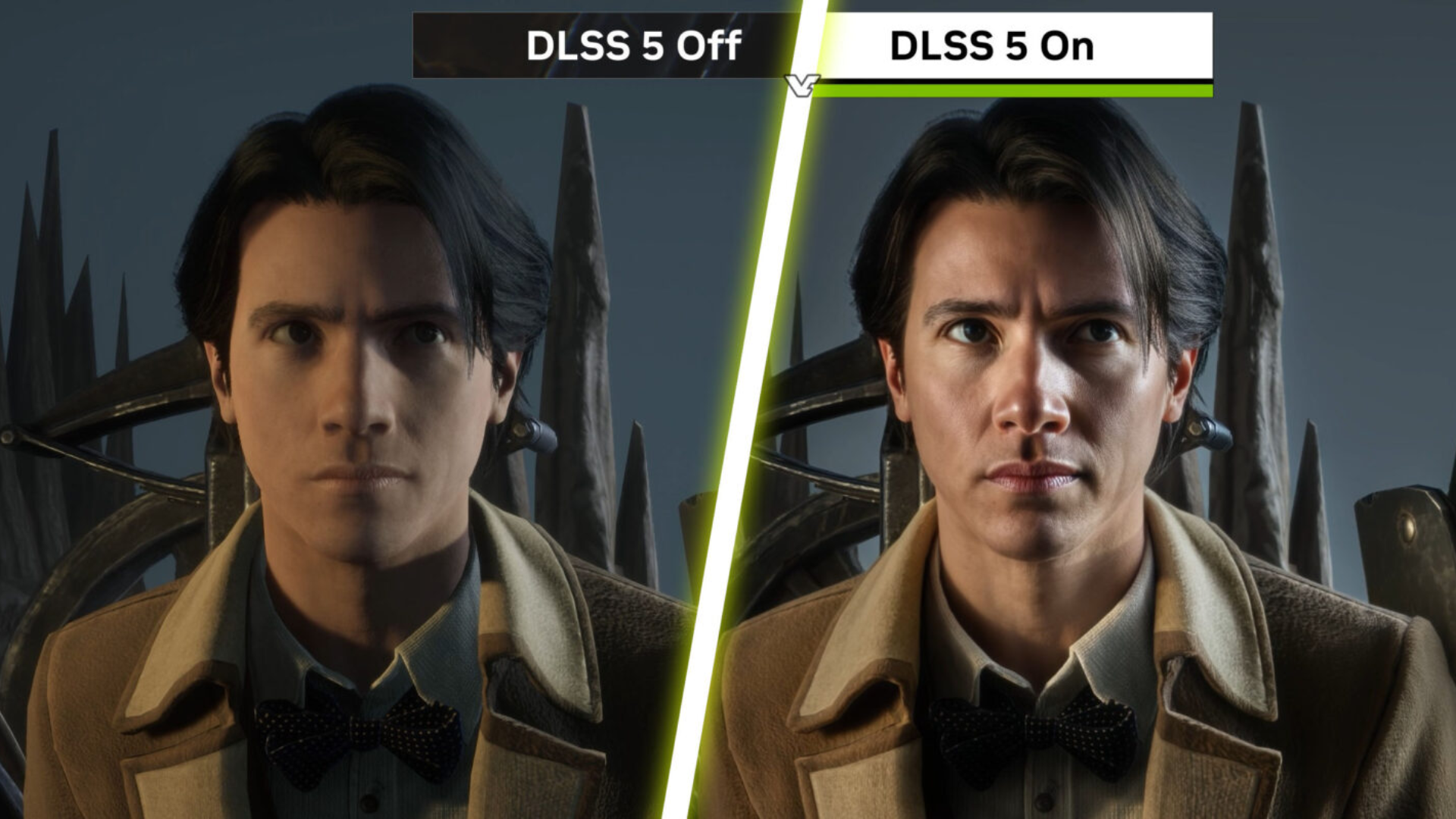

NVIDIA’s DLSS 5 reveal is facing strong backlash on YouTube, with viewers reacting negatively to both the main trailer and multiple game demos. The video crossed 1 million views, yet engagement shows a clear dislike trend, which points to growing concern among gamers about how the new technology affects visuals.
The main reveal trailer received only about 16% positive ratings, with around 16,100 likes and 82,500 dislikes. Similar patterns appeared across individual demo videos, where approval ratings stayed below 20% for most titles, showing that the reaction is not limited to a single video but reflects a broader sentiment.
According to VGC, several DLSS 5 demo videos posted low approval ratios, including Resident Evil Requiem, Starfield, Hogwarts Legacy, and EA Sports FC. Even the Zorah Unreal tech demo, which performed slightly better, still recorded more dislikes than likes with a reported 37% positive rating.
DLSS 5 backlash spreads across demos
Here’s a quick look at reported engagement figures:
- Official reveal trailer: 16.3% positive (16,107 likes, 82,515 dislikes)
- Resident Evil Requiem: 14.9% positive (2,675 likes, 15,300 dislikes)
- Starfield: 18.2% positive (1,510 likes, 6,751 dislikes)
- Hogwarts Legacy: 18.7% positive (3,924 likes, 17,016 dislikes)
- EA Sports FC: 14.5% positive (717 likes, 4,232 dislikes)
- Zorah Unreal Tech Demo: 37% positive (12,290 likes, 20,863 dislikes)
The criticism mainly focuses on how DLSS 5 changes image output using AI. Some players believe the system alters the original art direction by adjusting lighting and materials, which leads to concerns about creative control in games.
NVIDIA addressed these concerns and said, “DLSS 5 is not a filter,” while adding that developers can control intensity, color grading, and masking through the SDK. This means studios can decide how and where the effect applies.
NVIDIA CEO Jensen Huang also responded to the backlash and said gamers are “completely wrong,” which further fueled the discussion around AI-driven visuals in gaming.
The debate continues as more players question whether these changes improve visuals or interfere with artistic intent.