
NVIDIA DLSS 5 continues to draw attention after its GTC 2026 reveal, as fresh hands-on impressions now give a clearer look at how the technology performs across real games, especially with its focus on dynamic lighting and scene awareness rather than simple upscaling tricks.
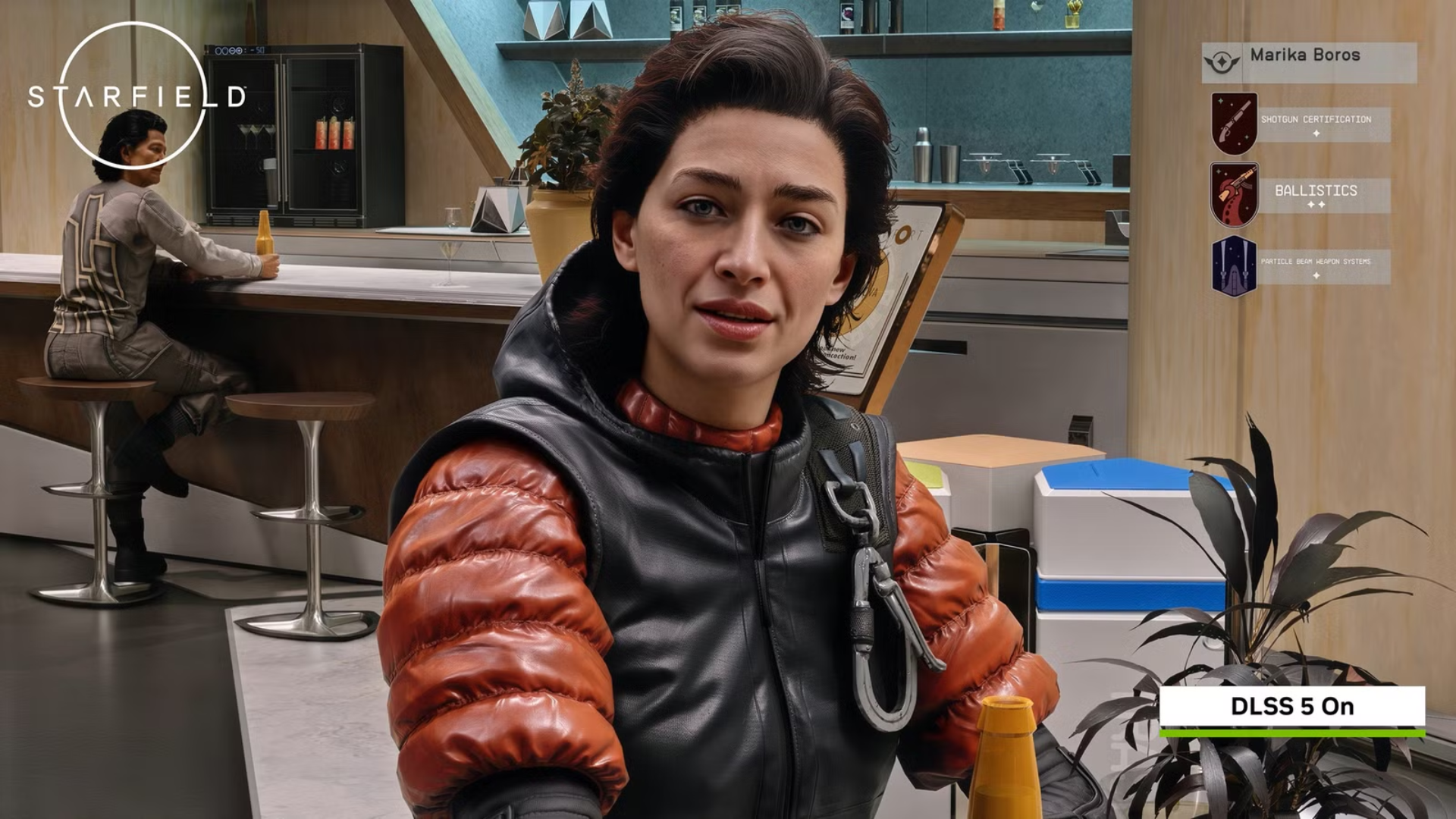
PC World recently showcased off-screen footage captured during the event, where journalists tested DLSS 5 across multiple titles including Starfield, Hogwarts Legacy, Assassin’s Creed Shadows, and Oblivion Remastered, and they were able to toggle the feature on and off freely, which helped expose how the system reacts in real time to different environments.
PC World’s Adam shared that DLSS 5 noticeably adjusted lighting depending on context, as indoor and outdoor scenes displayed clear differences instead of applying a uniform effect, which shows that NVIDIA is pushing beyond static enhancements and into more adaptive rendering.
“I look at the DLSS 5 on and it looks like what I imagined the scene would look like to me if I was standing there outside. And the DLSS 5 off looks like what I would look at through a camera that has a more limited range and stuff like that, right? Like you crank in the aperture closed.”
That comparison to “human eyes” versus a “camera” fits what DLSS 5 aims to achieve, although early observations still point to inconsistencies, as some areas like vegetation showed overly strong bounce lighting while metallic surfaces inside ships delivered improved reflections, stronger rim lighting, and better shadow depth.
Mixed Results With Clear Potential
Adam preferred DLSS 5 turned off in its current state, even though he acknowledged that the technology delivers a more natural visual impression in certain scenes, which suggests that the system still needs tuning before it reaches consistent output across different environments.
Another key takeaway came from NVIDIA engineers, who confirmed that a driver-level toggle for DLSS 5 remains possible, even though it is not part of the current implementation, which raises the idea of enabling the feature globally without requiring direct developer support.
Confirmed Games and Release Window
NVIDIA plans to roll out DLSS 5 starting Fall 2026, with confirmed titles including Starfield, Hogwarts Legacy, Assassin’s Creed Shadows, Resident Evil Requiem, AION 2, and Oblivion Remastered, along with several upcoming projects that will adopt the technology as it matures.