Microsoft and the Johns Hopkins University recently announced a collaboration that could result in a solution that helps improve patient safety and care quality in the future. The collaboration is aimed at creating a solution that draws data from medical records in conjunction with the modern devices people use every day. Once the data has been gathered, the information can help better determine when a patient would require treatment to prevent possible medical complications. Microsoft likens it to “a life-saving checklist that operates in real time.”
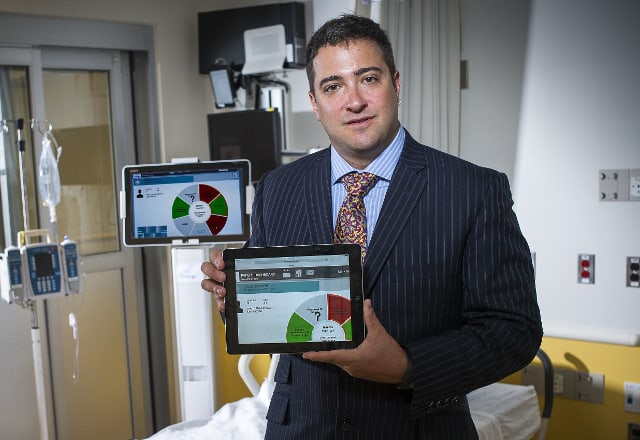
Part of the solution relies on a previous Johns Hopkins efforts with Project Emerge. Project Emerge uses a $9.4 million (US) grant to create tablet-based apps to help coordinate data for clinicians.
The foundation of Project Emerge is a tablet application that coordinates and integrates all data from all monitoring equipment and information systems. Rather than scavenge medical records, devices and other sources to ensure patients receive all the appropriate care, clinicians can use the tablet app to quickly see all data in one location.
The tablet apps were also designed to help patients and their families interact with the health staff at hospitals. Patients and family members could use the bedside tablet and app to ask questions about health care, and include a patient’s favorite music or television programs.
Couple with Project Emerge, Microsoft’s Cloud will help scale the university’s earlier solution to bring real-time date-driven intelligence to patient care soon. Using Microsoft’s Azure computers, Johns Hopkins University will be able to tap into massive amounts of storage, analytics, and actionable insights while having everything tied together across mobile efforts, sensors and upcoming Internet of Things (IoT) devices.
Microsoft’s Health Division states:
Our mutual goal is to deliver Project Emerge to health organizations across the country and transform the way care is delivered by arming health professionals with the right information, at the right time.
By combining our leading expertise, Johns Hopkins and Microsoft hope to capture the immense opportunity to transform intensive care, and dramatically reduce the estimated 400,000 lives lost each year from preventable harms.”
Over the past few months, we’ve been reporting about how Microsoft’s cloud-connected efforts are making splashes in the health industry as it allows caregivers to jump in and out of mountains of metrics while also streamlining processes for many hospitals.
Project Emerge is currently just a pilot program and it may take some time before its partnership with Microsoft bears any tangible fruit, but the possibilities for improving health care seem to be within arms reach.