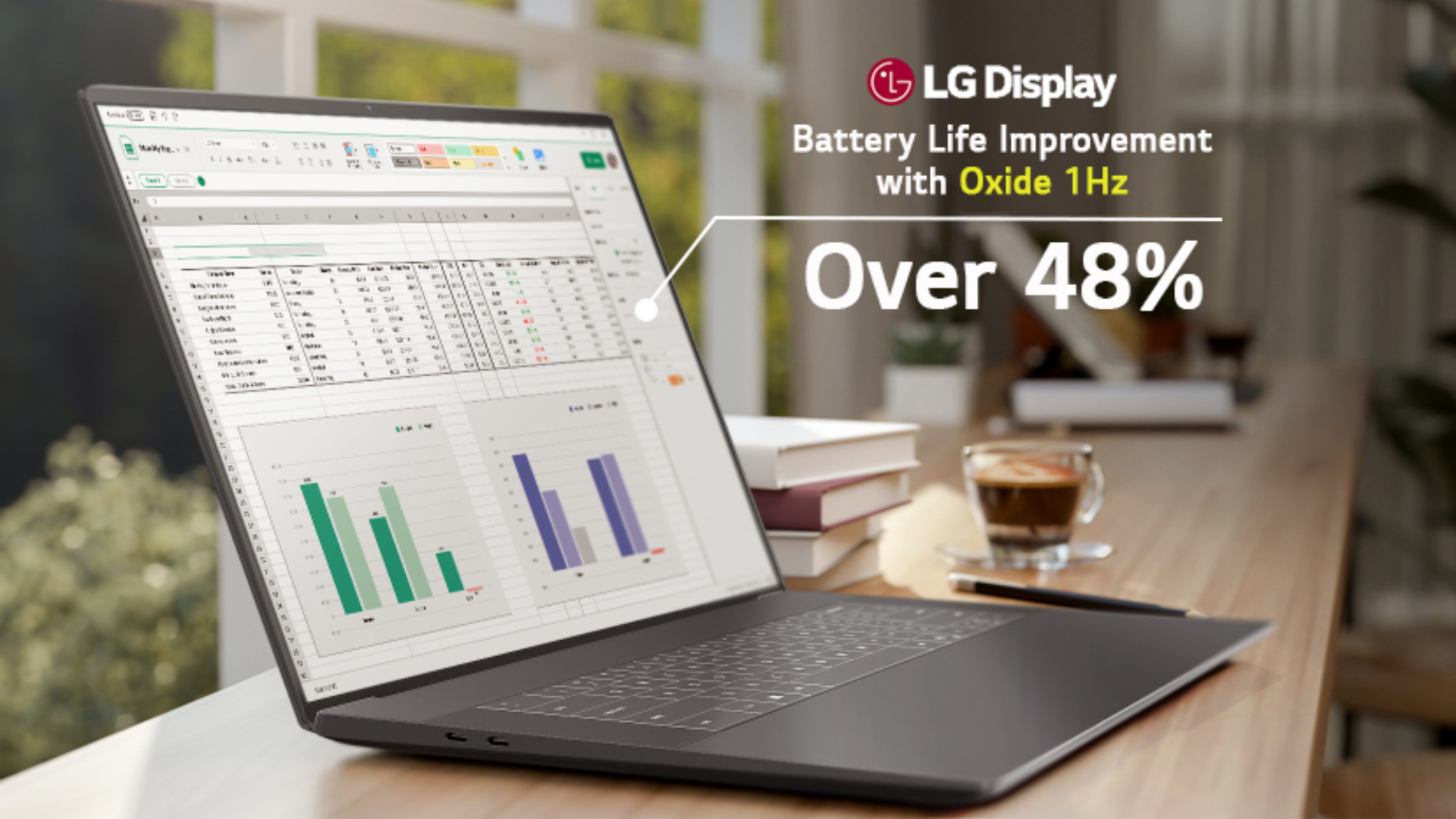

LG Display has started mass production of a new laptop LCD panel that supports a 1Hz to 120Hz variable refresh rate, and this shift focuses directly on improving battery life while keeping smooth visuals intact. The panel adjusts refresh rate based on what you do on screen, so it drops to very low levels when the display stays static and ramps up instantly when motion increases, which keeps performance responsive without wasting power.
The company built this panel using its Oxide 1Hz technology, which allows the screen to scale down to 1Hz during tasks like reading emails or working on documents, then jump to 120Hz for scrolling, video playback, or gaming. This approach reduces unnecessary panel activity and improves efficiency during everyday use, while still delivering fluid visuals when needed.
LG Display confirmed the production milestone;
“LG Display, the world’s leading innovator of display technologies, today announced that it is beginning the world’s first-ever mass production of an LCD panel for laptops equipped with its Oxide 1Hz technology.”
— LG Display
How the panel improves battery life
The panel detects screen activity in real time and adjusts refresh rate automatically, which means it avoids running at higher refresh rates when nothing changes on screen. LG Display says this results in up to 48% longer battery life compared to existing panels, and it achieved this through new circuit algorithms, updated panel design, and oxide materials that reduce leakage at lower refresh rates.
Dell will bring this panel to market first, as it plans to include it in its premium XPS lineup that it showcased earlier at CES 2026. These models include updated XPS 14 and XPS 16 variants, which offer LCD and OLED display options.
Dell explained how the feature works in practice;
“The LCD display has smart power management you’ll never notice, except when it comes to how long your battery lasts. As the first to market with a 1 to 120Hz variable refresh rate, our panel drops to 1Hz for static content, like reading emails, and ramps to 120Hz when you’re scrolling or watching video.”
— Dell
LG Display also plans to extend this approach to OLED panels, with mass production of a 1Hz OLED display expected in 2027, which shows the company is building this low refresh power-saving design into its long-term roadmap.