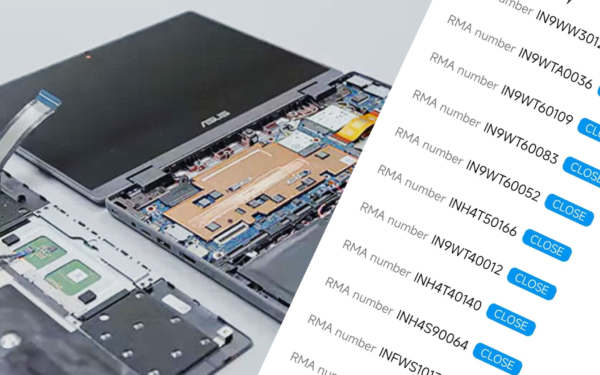

High-end laptops powered by Intel’s Panther Lake chips are getting more expensive in China, and the price jump is already large enough to change how buyers compare them with Apple’s MacBook M5 lineup, which continues to hold steady pricing across configurations.
The increase comes at a time when component costs are rising across the PC market, as shortages in DRAM and SSD supply continue to push hardware prices higher, and this trend now shows up clearly in new Panther Lake X series laptops that rely on these components along with newer Intel CPUs.
According to reports from user @realVictor_M, several Panther Lake X laptops in China have seen price hikes starting from 1000 Yuan, which is about $145, and going up to as much as 6000 Yuan, or roughly $870, depending on the configuration and brand.
Price hikes hit multiple laptop brands
Manufacturers have already adjusted pricing across multiple models, and the impact varies based on hardware specifications and positioning.
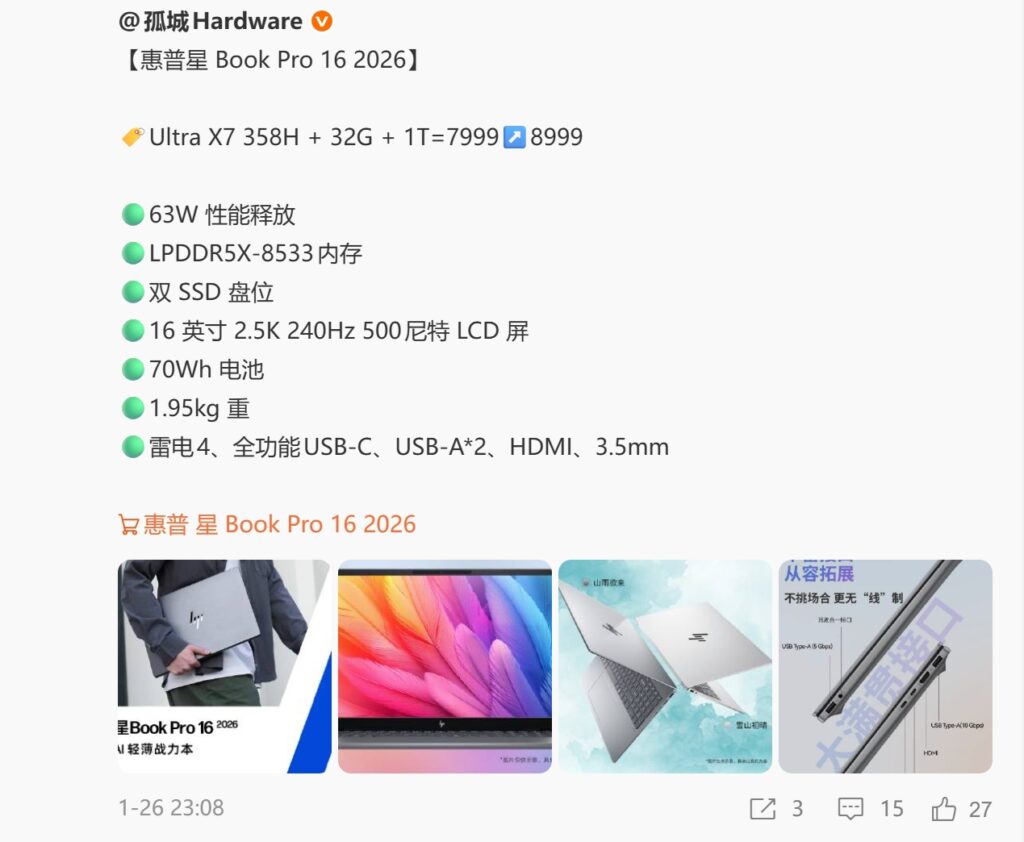
- HP Book Pro 16 (2026) with Core Ultra X7 358H increased from 7999 Yuan to 8999 Yuan
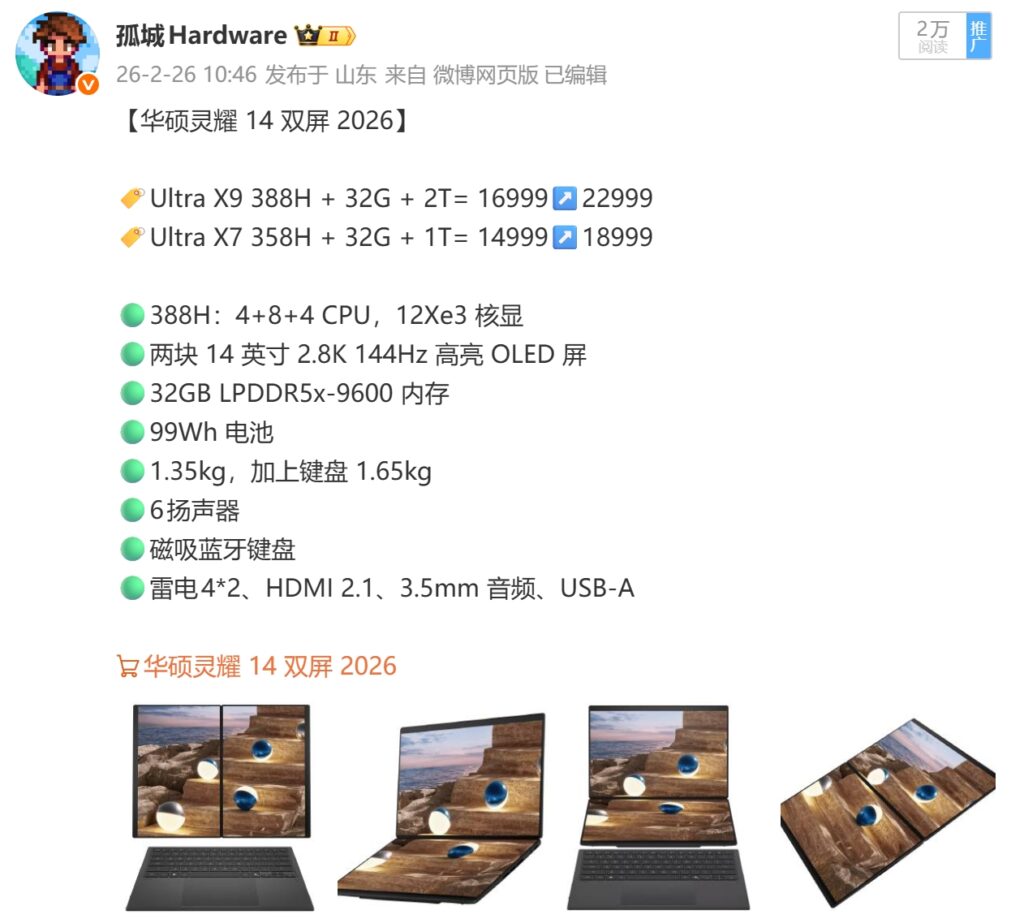
- ASUS Zenbook Duo 14 with Core Ultra X7 358H jumped from 14,999 Yuan to 18,999 Yuan
- Higher-end ASUS configuration with Core Ultra X9 388H now costs 22,999 Yuan after a 6000 Yuan increase
- Huawei models with similar Panther Lake chips also reflect higher pricing across configurations
These changes show how rising CPU, RAM, and storage costs are directly affecting final laptop pricing, especially in premium segments where high-end specifications drive margins.
MacBook M5 prices remain unchanged
Apple’s MacBook Air M5 lineup continues to hold its pricing in the same market, which now creates a clearer gap in value positioning when compared to Intel-powered alternatives.
- 13-inch MacBook Air M5 starts at 8499 Yuan for 16GB + 512GB
- 15-inch model starts at 9999 Yuan for the same configuration
As Intel prepares further price adjustments for its CPUs, this gap could widen, and buyers looking at high-end laptops may start weighing stable pricing against rising costs in the Windows ecosystem.