
Intel has officially ended support for its XeSS plugin for Unity, and the move leaves developers with no future updates, fixes, or official maintenance. The company archived the repository on March 30, 2026, and set it to read-only, which means developers can still access the code but will not receive any further improvements or support. This decision directly affects Unity developers who relied on XeSS for AI-based upscaling in their projects.
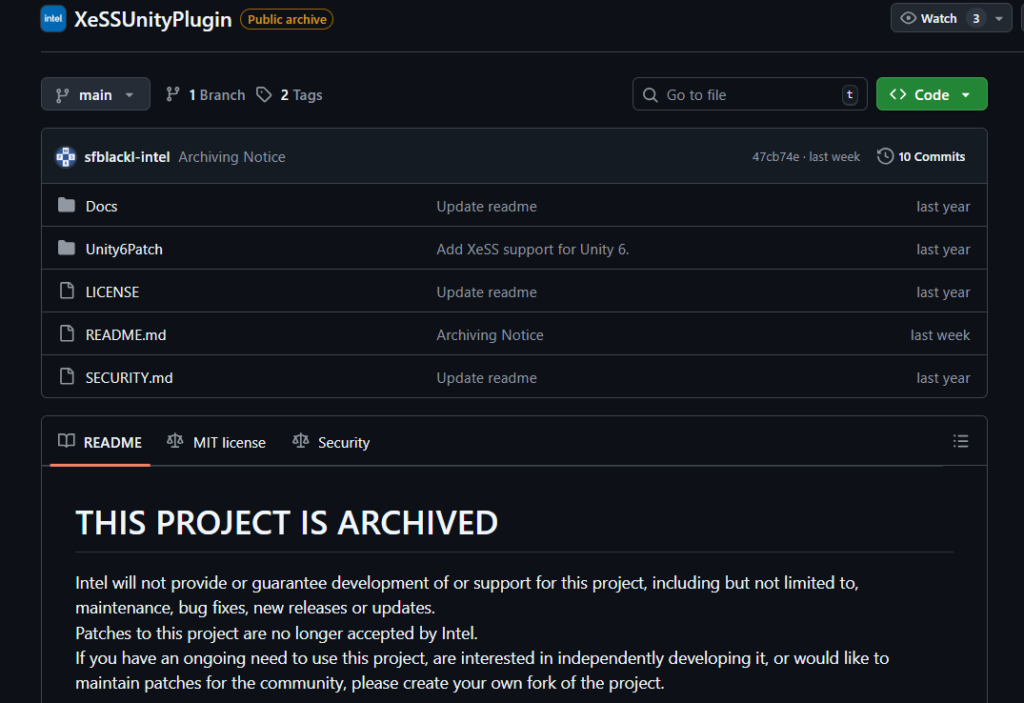
Intel has also added a clear discontinuation notice to the repository, even though the project still includes Unity 6 patch files and HDRP integration instructions. The last public release remains version 2.0.5 from March 26, 2025, so the plugin now exists as a static tool with no roadmap. Developers who still want to use it will need to maintain their own fork, which adds extra workload and long-term uncertainty for production pipelines.
Focus shifts to other engines
Intel continues to push XeSS development elsewhere, and the main XeSS SDK now supports XeSS 3 with ongoing updates. The company also keeps improving its Unreal Engine plugin, with version 3.0.1 bringing support for XeSS SDK 3.0.0 and Unreal Engine 5.7. This shift shows a clear focus on engines where Intel sees stronger adoption and long-term value.
The situation is not limited to Intel, as AMD has also stepped away from active Unity plugin development. Its latest FSR SDK highlights Unreal Engine 5 support with FSR 4, while the Unity plugin still lists FSR 2 and has not seen updates in years. NVIDIA takes a different route, as DLSS support comes directly through Unity’s High Definition Render Pipeline instead of a separate plugin.
Developers working on Unity projects now face a clear choice, either continue with unsupported tools or move toward engines that still receive active graphics feature updates.