
Intel’s Core 9 273PQE from the Bartlett Lake lineup has appeared in PassMark benchmarks, and the results show strong performance despite using only Performance cores. The chip stands out because it delivers competitive scores against higher core-count CPUs, even without Efficient cores.
The Core 9 273PQE features 12 cores and 24 threads, all based on P-core architecture, with boost clocks reaching up to 5.9 GHz. It posted a multithread score of 45,427 and a single-thread score of 4,655, which places it close to top-tier desktop processors from the Raptor Lake Refresh lineup.
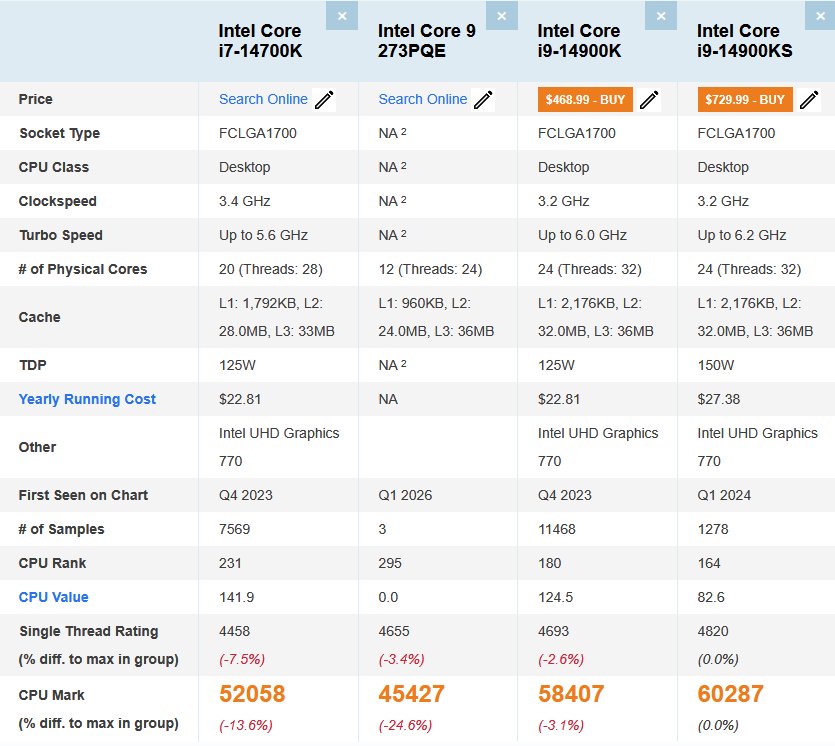
According to @x86deadandback, the benchmark result highlights how the chip performs against mainstream CPUs like the Core i7 14700K and Core i9 14900K, even though it targets the embedded segment. The data shows that:
“the 273PQE delivers 45,427 points in the multi-threaded test, which is about 22% lower than the multi-threaded score of the i9 14900K.”
Performance comparison with Raptor Lake chips
The comparison becomes more interesting when looking at core counts and architecture differences. The Core 9 273PQE uses only 12 P-cores, while chips like the i9 14900K combine Performance and Efficient cores for higher total counts.
Here is how it compares:
- Around 12% slower than Core i7 14700K in multi-thread
- About 22% behind Core i9 14900K in multi-thread
- Slightly stronger single-thread performance than Core i7 14700K
This shows that strong P-cores can still compete with hybrid designs in certain workloads, especially in single-threaded tasks and gaming scenarios.
Intel has designed the Bartlett Lake series for embedded platforms, which means these CPUs will not reach the consumer desktop market. Even so, the benchmark results suggest that a P-core-only design still delivers high performance, making it suitable for intensive computing workloads where efficiency and consistency matter.