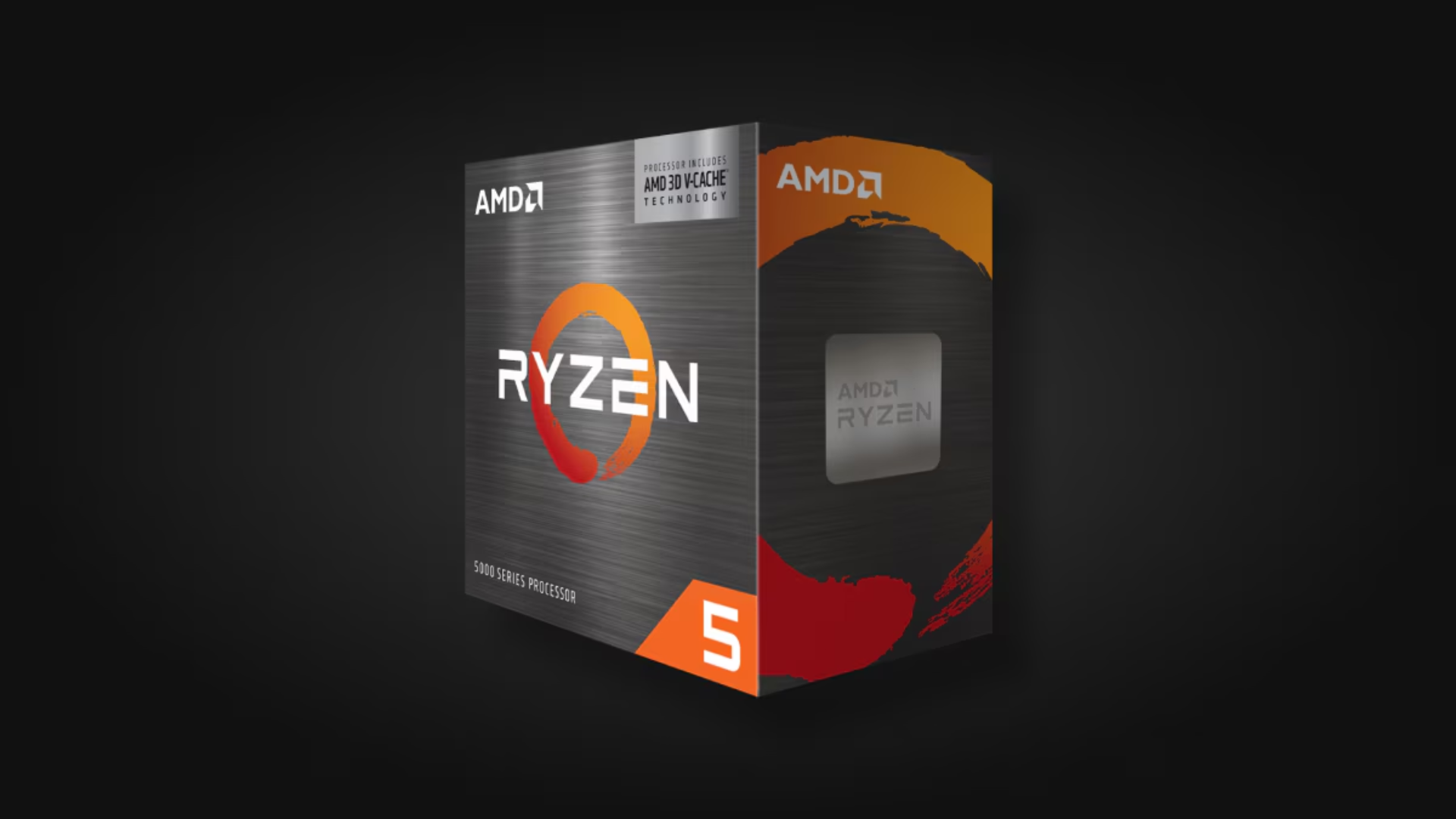

AMD has quietly expanded the availability of its cheapest X3D processor, the Ryzen 5 5500X3D, and the chip has now surfaced in the UK at a retail listing price of 179 pounds, which shows that the company continues to support its aging AM4 platform while offering strong gaming performance at a lower cost for users who are not ready to move to newer DDR5 systems.
The processor first launched with limited regional availability, mainly targeting LATAM and later appearing in China, but the latest listing suggests AMD is gradually pushing the chip into more markets even though it has not made an official announcement about broader global expansion.
PC Tec UK has listed the Ryzen 5 5500X3D as an OEM tray version, which means buyers will not get retail packaging or bundled cooling, and while the listing shows an estimated dispatch starting March 30, the product currently appears out of stock, which suggests limited supply rather than a full-scale retail rollout.
PC Tec UK notes that the processor is not widely available through other UK retailers, which indicates that this remains a controlled or early distribution phase rather than a full launch across the region.
Strong gaming performance on AM4
The Ryzen 5 5500X3D continues AMD’s strategy of extending the life of the AM4 platform by offering X3D cache technology in a more affordable segment, and it delivers solid gaming performance thanks to its 96 MB of L3 cache, which improves latency-sensitive workloads like gaming.
The chip features 6 cores and 12 threads based on the Zen 3 architecture, with boost clocks reaching up to 4.0 GHz and a 105W TDP, and while it sits below the Ryzen 5 5600X3D in AMD’s lineup, it delivers comparable gaming results for users who want a budget-friendly upgrade without switching platforms.
This positioning becomes more relevant as AMD has already discontinued higher-end X3D parts like the Ryzen 7 5800X3D and 5700X3D, which leaves fewer options for gamers who prefer the AM4 ecosystem and want the benefits of stacked cache technology.
Ryzen 5000 Series overview
| Processor | Year | Silicon | Cores/Threads | Base/Boost Clocks | TDP | iGPU |
|---|---|---|---|---|---|---|
| Ryzen 9 5950X | 2020 | Vermeer | 16C/32T | 3.4/4.9 GHz | 105W | ❌ |
| Ryzen 9 5900XT | 2024 | Vermeer | 16C/32T | 3.3/4.8 GHz | 105W | ❌ |
| Ryzen 9 5900X | 2020 | Vermeer | 12C/24T | 3.7/4.8 GHz | 105W | ❌ |
| Ryzen 7 5800X3D | 2022 | Vermeer X3D | 8C/16T | 3.4/4.5 GHz | 105W | ❌ |
| Ryzen 7 5700X3D | 2024 | Vermeer X3D | 8C/16T | 3.0/4.1 GHz | 105W | ❌ |
| Ryzen 5 5600X3D | 2023 | Vermeer X3D | 6C/12T | 3.3/4.4 GHz | 105W | ❌ |
| Ryzen 5 5500X3D | 2025 | Vermeer X3D | 6C/12T | 3.0/4.0 GHz | 105W | ❌ |
| Ryzen 5 5600 | 2022 | Vermeer | 6C/12T | 3.5/4.4 GHz | 65W | ❌ |
| Ryzen 5 5500 | 2022 | Cezanne | 6C/12T | 3.6/4.2 GHz | 65W | ❌ |
The Ryzen 5 5500X3D gives gamers a clear upgrade path on existing AM4 systems, especially for users who want better gaming performance without investing in new motherboards and DDR5 memory, and it keeps the platform relevant at a time when budget-conscious buyers still rely heavily on older hardware ecosystems.
As availability expands slowly into more regions, this processor fills a gap in AMD’s lineup and strengthens the value of entry-level gaming builds that focus on performance rather than platform upgrades.