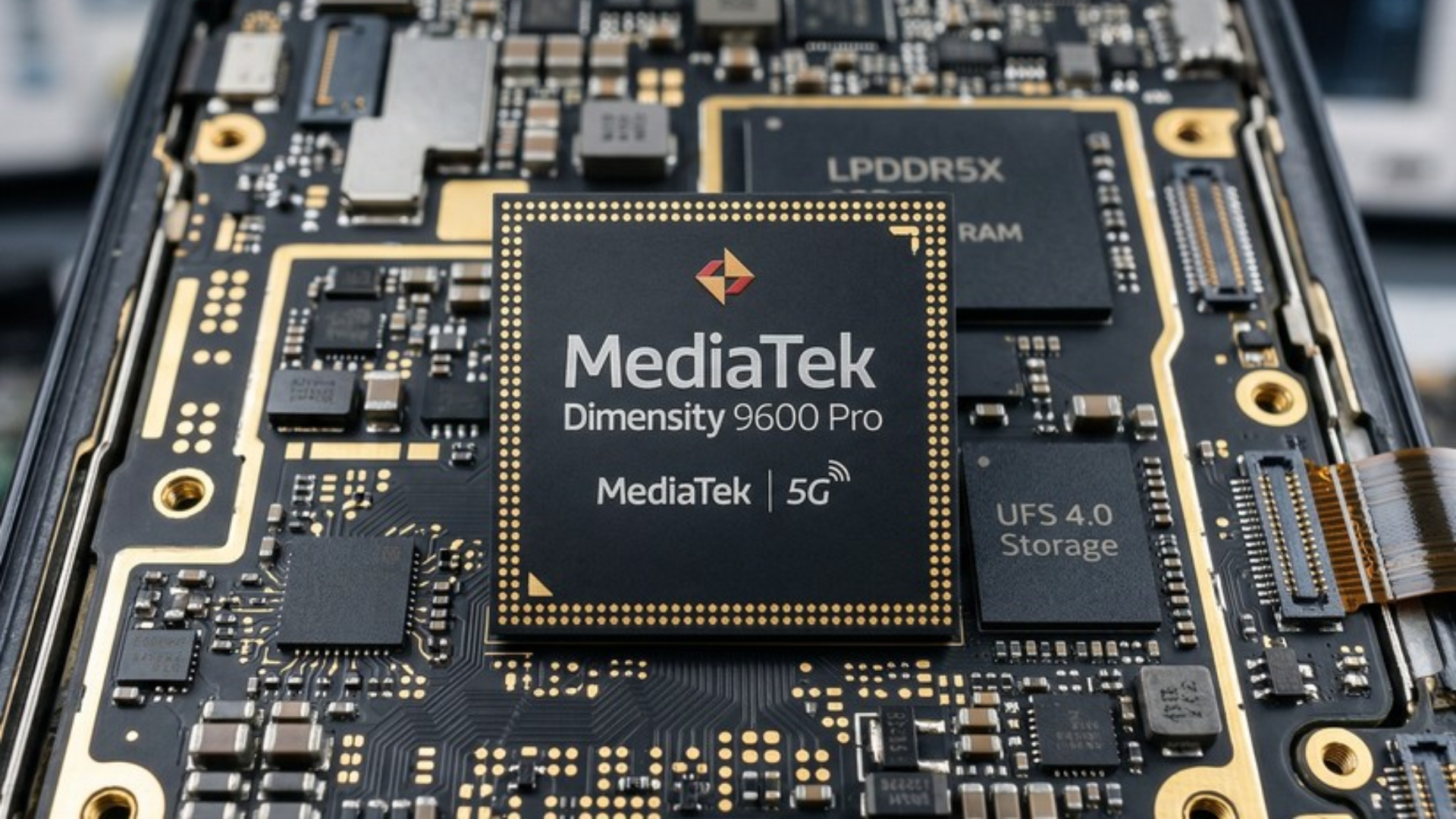

MediaTek is preparing a new high-end chipset called the Dimensity 9600 Pro, and early details show that the company is pushing performance much higher than before, with a reported target frequency of 5.00GHz and a redesigned CPU setup that aims to deliver desktop-level performance in smartphones, but the early information also points to a major issue with heat management that could limit how long the chip can sustain those speeds.
Weibo tipster Digital Chat Station claims that MediaTek plans to introduce this Pro version later this year as a direct response to Qualcomm’s upcoming Snapdragon 8 Elite Gen 6 Pro, and the new chipset will likely use a ‘2 + 3 + 3’ CPU cluster with two high-performance super cores, which marks a shift from the previous Dimensity 9500 design that relied on a single prime core, and this change should improve both single-core and multi-core performance under demanding workloads.
Desktop-level performance meets mobile limits
The Dimensity 9600 Pro aims to reach 5.00GHz, but reports suggest that this speed will only be available in short bursts because smartphones cannot handle sustained heat like desktop systems that use large cooling setups, and even with vapor chambers, liquid cooling layers, or active fans, the chip still struggles to maintain stable temperatures during heavy use.
As a result, the chipset is expected to throttle down quickly to a more stable range between 4.00GHz and 4.20GHz, which means users may not see consistent peak performance in real-world scenarios, especially during gaming or long sessions of intensive tasks.
2nm process helps, but efficiency remains a concern
MediaTek plans to build the Dimensity 9600 Pro using TSMC’s advanced 2nm ‘N2P’ process, and while this should improve efficiency and thermal headroom, the chipset will still rely on ARM’s standard CPU designs instead of custom cores like Qualcomm’s Oryon, which may affect how efficiently it handles power and heat under load.
The company may also release a standard Dimensity 9600 alongside the Pro version with lower clock speeds and fewer thermal challenges, but more details will surface closer to launch as MediaTek finalizes its approach to balancing performance and cooling.