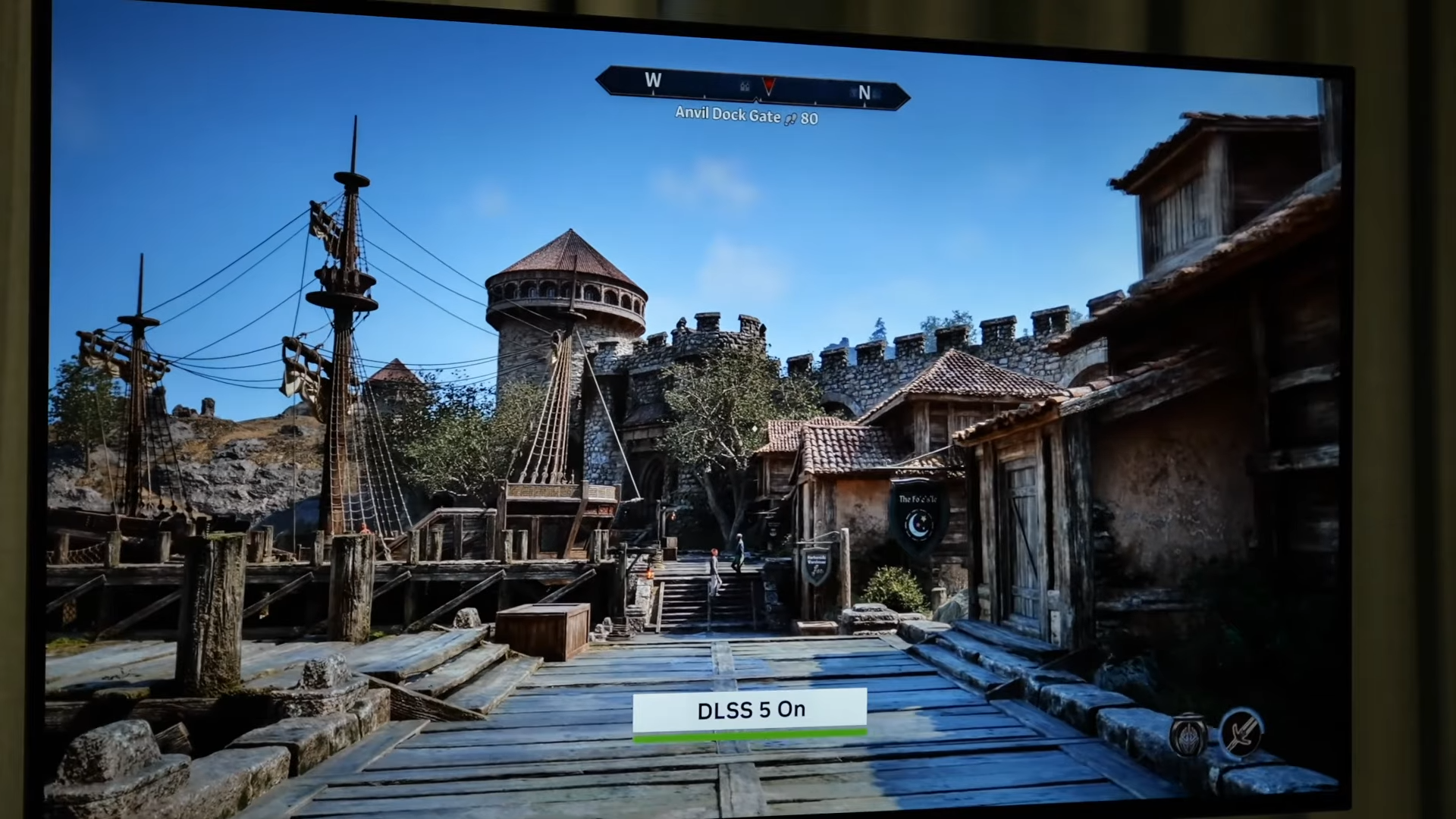

NVIDIA DLSS 5 has faced strong criticism since its GTC 2026 reveal, with gamers pointing to strange visual artifacts in official demos and accusing the AI upscaling tech of distorting game visuals, but a closer breakdown now shows many of these issues were already present in the original game engines and rendering systems.
Analysis challenges DLSS 5 criticism
Content creator WhizzDumbPlayz reviewed multiple DLSS 5 comparisons and found that several so-called “geometric anomalies” were not introduced by AI processing, as many viewers assumed, but were already visible in base game footage, especially in titles like Starfield and Oblivion Remastered where engine-level bugs and lighting limitations play a major role.
In the Starfield example, a widely shared clip showed a character with a distorted nostril and strange hair artifacts, which many users blamed on DLSS 5, but the analysis shows that these visual inconsistencies come from Bethesda’s Creation Engine, where mesh behavior and lighting interactions already produce flickering shadows and misplaced details during dialogue scenes.
The same pattern appears in Oblivion Remastered, where a character’s eyelids looked duplicated in DLSS 5 footage, yet identical anomalies also appear when the feature is turned off, which suggests the issue comes from the game itself rather than NVIDIA’s processing.
Frame generation and lighting add confusion
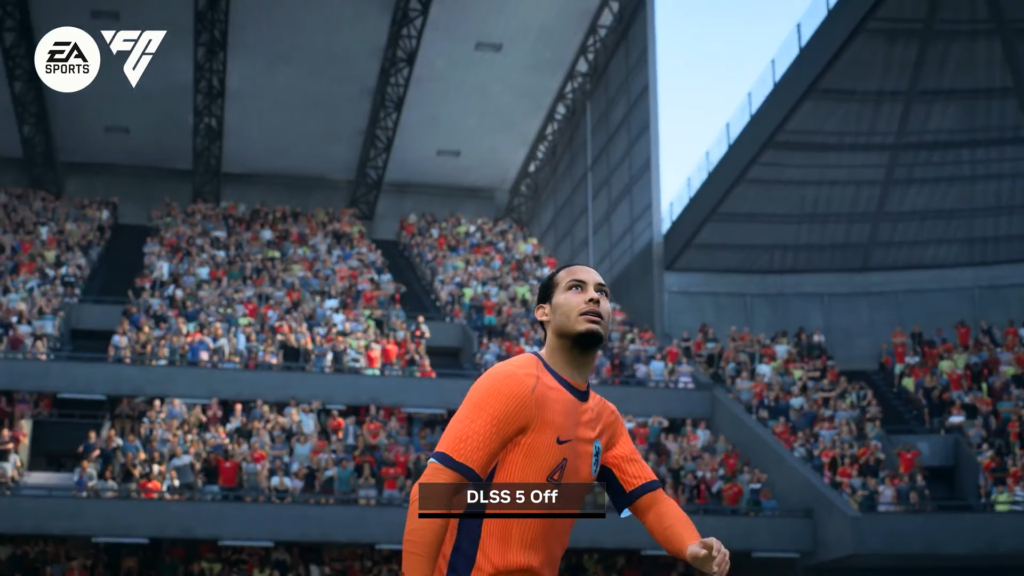
Some artifacts, including motion blur and unstable shadows, link more closely to frame generation rather than DLSS 5 itself, especially in Starfield where DLSS Frame Generation was active during the demo, which explains why certain effects looked exaggerated during movement-heavy scenes.
At the same time, lighting limitations also play a role, as traditional global illumination systems struggle with accurate shadow placement, which leads to visual distortions like the nostril issue highlighted in early comparisons.
Misaligned comparisons fuel backlash
The most controversial example came from Resident Evil Requiem, where viewers claimed DLSS 5 altered a character’s face significantly, but the analysis points to inconsistent framing and animation states between the comparison shots.
“The comparison shots were taken at very slightly different angles; the backgrounds don’t even line up exactly. They also didn’t match Grace’s idle animation. Throughout the off shot, her mouth is closed, but in the on shot, her mouth is slightly open. You can even see her teeth a bit when zoomed in. You can tell that her eyes are slightly more open, or perhaps her head being tilted back a tiny bit is making her eyes appear slightly larger. You can tell the tilt of her head is slightly different when you compare the nose in the on and off shots.” — WhizzDumbPlayz
This breakdown explains why the “face change” criticism gained traction, since small differences in angle and animation made the DLSS 5 version look dramatically different.
Real issues still remain
Despite clearing up many claims, the analysis still highlights some real concerns, including halo effects around characters and occasional shadow loss in scenes where directional lighting changes abruptly, which shows that DLSS 5 still needs refinement before its planned Fall 2026 release.
Developers and modders remain cautious, and NVIDIA now needs to address these visible flaws while also improving how it presents comparisons, since early perception has already shaped how many players view the technology.