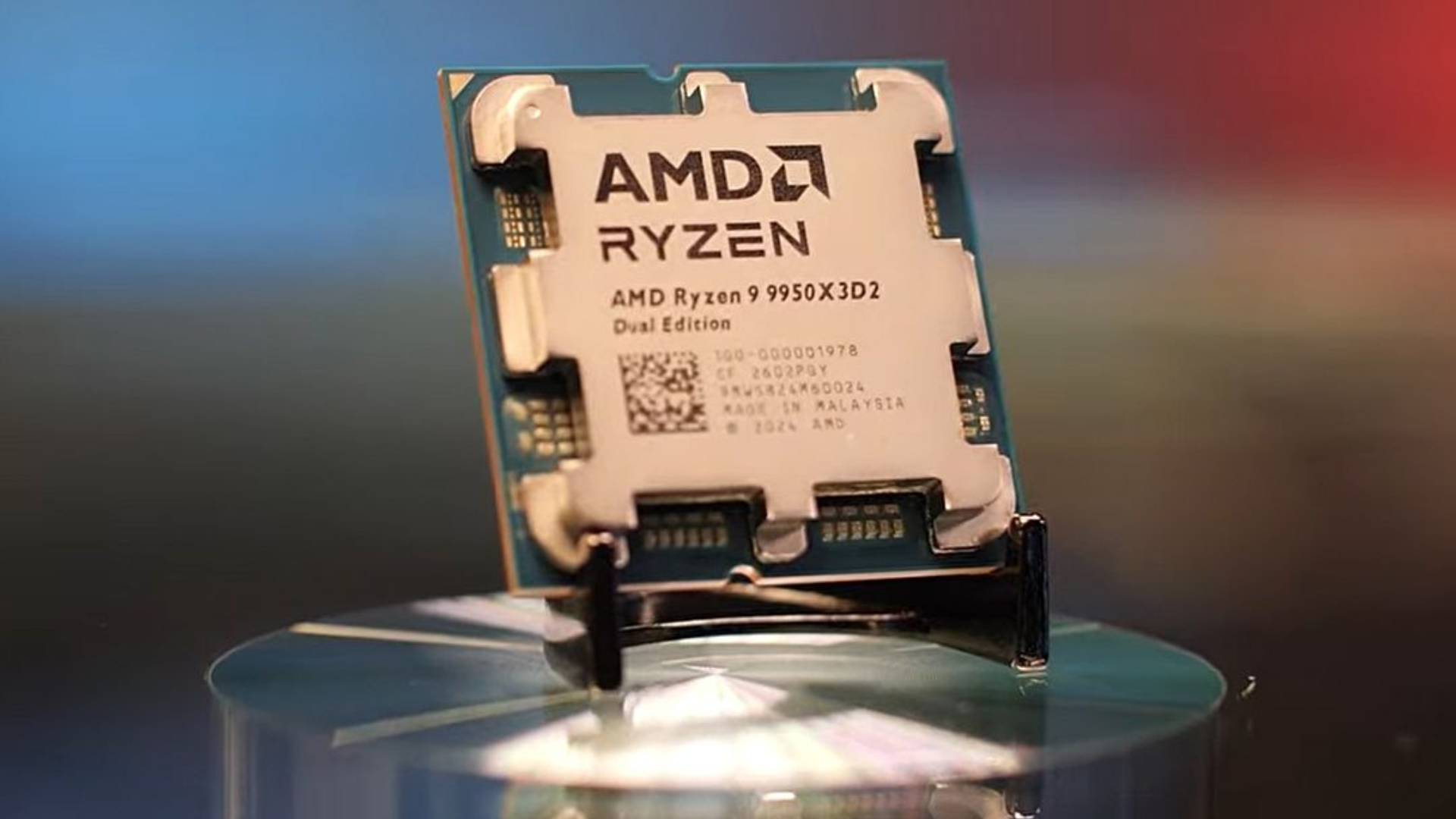

The AMD Ryzen 9 9950X3D2 Dual Edition CPU shows strong memory overclocking performance when paired with the ASUS ROG Crosshair X870E APEX motherboard, as new testing demonstrates how far AMD’s AM5 platform has progressed in handling high-speed DDR5 memory while maintaining tight timings.
The test setup used the Ryzen 9 9950X3D2, 32GB of DDR5 memory, and ASUS’s latest X870E APEX board, while the system ran on the latest AGESA 1.3.0.1 BIOS firmware through the 2201 beta update, which helped push memory speeds to DDR5-8800 with CL32 timings, a result that stands out because high-frequency DDR5 kits usually require much looser timings to remain stable.
The system reached DDR5-8800 speeds using G.Skill memory modules based on the Trident Z5 NEO series, originally rated for 6000 MT/s at CL26, and this jump represents a 46.6 percent increase in frequency while still holding relatively tight latency, which is unusual since DDR5-8000 kits often run at CL40 or higher.
The testing environment included water cooling and several validation tools such as RunMemtestPro, ZenTimings, ROG CPU-Z, RAM Test, and TestMem5, all confirming that the system maintained stability at these aggressive settings, which highlights how both the CPU and motherboard tuning play a key role in achieving such results.
AM5 Platform Continues to Improve
AMD’s AM5 platform has steadily improved memory compatibility and tuning headroom, and while Intel platforms still lead in some advanced memory formats like CUDIMM and CQDIMM, AMD is expected to close that gap with future motherboard designs and upcoming Zen 6 processors.
This result shows that AMD’s latest 3D V-Cache architecture, combined with refined BIOS support, is not just about gaming performance but also about pushing memory performance further, which matters for enthusiasts who want both speed and efficiency from their systems.