
Apple used March 3 for a straight-to-the-point hardware dump, updating its MacBook lineup with the new M5 generation, introducing M5 Pro and M5 Max for the MacBook Pro, and refreshing its external displays with a new Studio Display and a new Studio Display XDR.
Preorders start Wednesday, March 4, with availability on Wednesday, March 11.
MacBook Air gets M5 and bigger base storage
The MacBook Air refresh is headlined by the move to Apple’s M5 chip. Apple says M5 brings a faster CPU and a next-generation GPU, plus a “Neural Accelerator” in each GPU core for AI-related workloads.
Pricing starts at $1,099, and Apple is also bumping the base storage configuration up to 512GB, which matters because the base model has been an easy target for “you’ll pay extra for storage anyway” complaints.
Apple is leaning on larger base storage to keep value perception strong even as component costs rise.
We are getting newer connectivity on the Air, including Wi-Fi 7 and Bluetooth 6, along with faster SSD performance claims and higher maximum storage configurations depending on the model.
MacBook Pro moves to M5 Pro and M5 Max
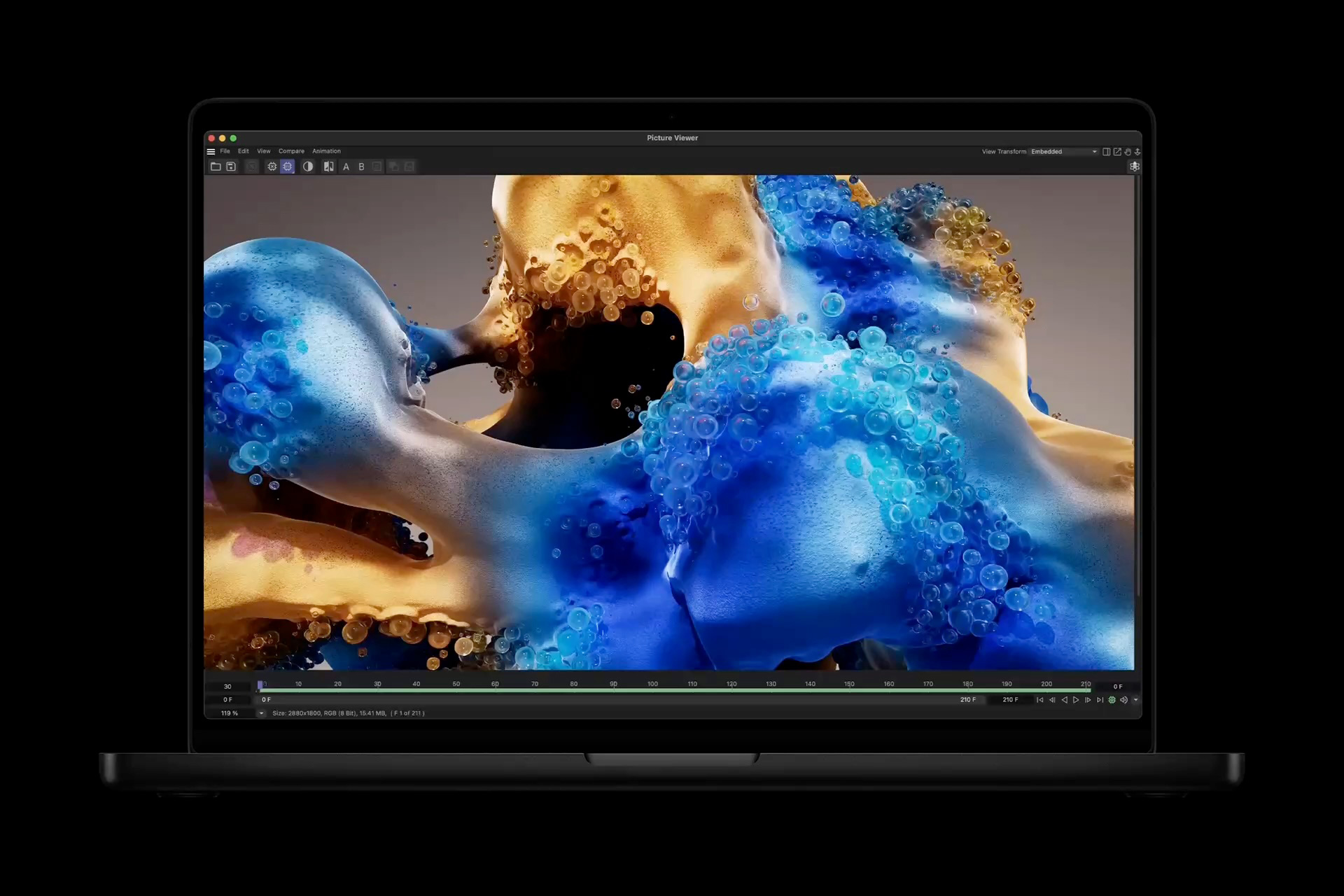
Apple also updated the MacBook Pro lineup with M5 Pro and M5 Max options. Apple’s own framing is familiar: M5 Pro is for demanding workflows like coding and photo work at scale, while M5 Max is aimed at people pushing heavier pro workloads like simulations, 3D, and high-end creative production.
Pricing and storage change, too.
The 14-inch MacBook Pro starts at $2,199 and now comes with 1TB of base storage (up from 512GB on prior baselines), preorders starting March 4 and retail availability on March 11.
M5 Pro and M5 Max: what’s actually new in the chips
Apple is making the chip story itself part of the announcement, not just a spec line on a laptop page. The company says M5 Pro and M5 Max are built using a new Apple-designed Fusion Architecture, pairing an advanced CPU with a next-generation GPU that includes Neural Accelerators, plus higher unified memory bandwidth to drive a big increase in AI compute.
Third-party coverage adds more color on the configuration targets, including higher unified memory ceilings on Max-tier machines and more aggressive GPU scaling for creative and compute-heavy tasks.
New Studio Display and Studio Display XDR replace the old monitor story
Apple didn’t stop at laptops. It also refreshed its monitor lineup with a new Studio Display and an all-new Studio Display XDR.
Apple says the Studio Display XDR is a 27-inch 5K Retina XDR display with a mini-LED backlight, 2,000 nits peak HDR brightness, and a 120Hz refresh rate. Pricing starts at $1,599 for the Studio Display and $3,299 for the Studio Display XDR, with preorders March 4 and availability March 11.
Studio Display XDR replaces the Pro Display XDR in Apple’s lineup, which simplifies the naming but also signals a reset in how Apple wants to sell “serious” displays to Mac users.
What this day adds up to
This wasn’t a single keynote moment, it was Apple tightening the Mac lineup with the M5 generation across Air and Pro, pushing its chip narrative harder with M5 Pro and M5 Max, and giving Mac users a fresh external display story that covers both mainstream and high-end setups.
It’s a “buy now” week for anyone waiting on the next Mac refresh, and the March 4 preorder date makes it clear Apple wants this hardware in the channel fast.