\n
One thing has been clear since Satya Nadella took the reins at Microsoft over a year ago: the old Microsoft is dead. Crippled by internal divisions and stagnation, which were somewhat inevitable given the size of its monopoly over the PC market, Microsoft in 2013 was losing ground, struggling to catch up. This seemed to hold true throughout 2014, with only vague glimpses of a brighter, Windows 10-lit future.
\n
In January, the likes of the Hololens worked wonders to reverse this image, showing a Microsoft that was not only looking at beating its competitors, but leapfrogging them altogether. And it was yesterday at Build 2015 that one announcement was made that likely trumps even Hololens for the impact it could have: Continuum.
\n
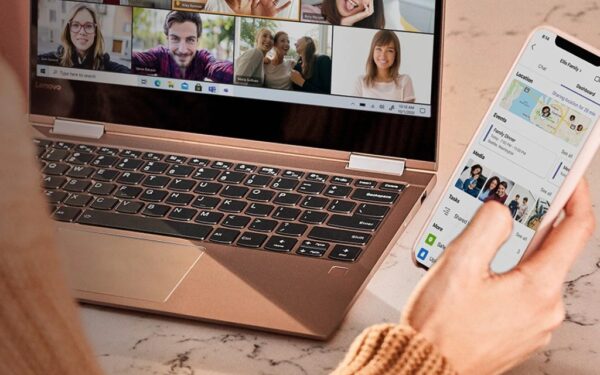
Continuum is the notion that one computing experience is continued regardless of the device used or the location. It allows for a consistent user interface, a familiar style of operation for the user to become accustomed to; and yet it is also more than this.
\n
In 2014, Canonical, the company behind Ubuntu, set itself a monumental task. A smartphone like no other, the Ubuntu Edge, was imagined, sleek in its industrial design. Running a full version of desktop Linux, in addition to a mobile-optimized version, this device was literally every computing device in one. With a monitor, wireless keyboard and mouse (with a dock), it was the equivalent of a desktop tower (with obvious power differences), and yet when unplugged it was a mobile phone once more.
\n

\n
Perhaps too niche, perhaps too forward-thinking, the device failed to make it past a 30-day IndieGoGo campaign with a $30 million goal. That day, the dream died.
\n
Microsoft opting to revive the project in some form, despite its abject failure, is a reflection both of its potential and the future that Redmond has planned for computing. What we are faced with at the moment is something of a crossroads in the story of personal computing.
\n
In the past, the evolution of the computer has been mostly defined by Moore’s Law; that is to say that, with every new generation of machines produced, size halves as power doubles. In the modern era of 14nm (and soon smaller) chip manufacturing, this progress has slowed somewhat.
\n
Instead, the struggle has been waged over what shape the computer of the future will be. In the 1990’s, the large desktop flanked by the enormous CRT monitor dominated. In the early 2000’s these monitors became flatscreen, saving space. Then, then laptop craze began, and portability became the new byword.
\n
In time, laptops became smaller and smaller, and then in 2010, the iPad was launched, redefining the computing experience for many. And now, with declining laptop and tablet sales, the ‘2-in-1’ has enjoyed something of a slow rise.
\n
\n
Shapes have come and gone, and yet with Continuum, Microsoft has shot for and reached the moon so to speak. With Windows 10, and its apps, working on and scaling to any device, and with phones that have the potential to be any device, the onus moves to the user to define their own experience, rather than the manufacturer.
\n
Of course, the rationale behind this is not simply to benefit the consumer. As was the case with the Ubuntu Edge, a large part of the appeal of such a versatile device rests within the enterprise world.
\n
Imagine you are an IT Manager of a large department, charged with upgrading both the office equipment and improving the connectivity of the working environment. To such a person, the potential offered by Continuum is considerable.
\n
With one purchase, all towers could be replaced by Continuum devices, which could also then double as phones. If more screen real-estate is required, the Surface range offers a convenient step up. And of course, all of these devices would come well integrated into Microsoft’s suite of services, compatible with all other major OSs, and possessing a large software library.
\n

\n
In the face of such a choice, Windows 10 becomes a genuinely intriguing proposition, and backed by the power of Microsoft’s cloud computing capabilities and the general familiarity that many users have with its products, in many scenarios it becomes something of a no-brainer. Given that Microsoft has so far failed in its attempts to colonize the tablet space, this allows the company to avoid it entirely.
\n
Both for the enterprise world and for the consumer world, Microsoft has come to offer something quite different from anything that has come before it with Continuum. Especially with the capability of the device to plug into televisions, allowing it to also become a media powerhouse.
\n
Though Windows 10 with its Windows universal apps is an idea that is so far strong both in its concept and execution, it isn’t the first to offer such a state of affairs. Many other firms, most notably Apple, offer a continuous user experience between different devices in the same ecosystem.
\n
By focusing on one single device, Microsoft has come across something that will not only allow its smartphone offerings to shine, but that will allow it to play to its strengths.
\n
Despite all of this, questions must be asked, both for the user and the developer. Will the transition always be fully seamless? What will be sacrificed in terms of power in order to achieve this end? What, if any, differences will there be in coding in order to achieve this effect? What aid will be given to developers in order to ensure a smooth user experience between the different modes? Will this be compatible with existing devices, like the Lumia 930 and 1520?
\n
As of the moment, we are in the dark. With Windows 10 still well over the horizon and Windows Phone still lacking a flagship with this potential (or seemingly any hope of one soon), it is difficult to predict the future. What is shown at product demos does not always translate to reality, what is so beautiful and seamless on the stage can often seldom live up to its promise.
\n
Yet, despite all of this, no one else is offering quite what Microsoft has promised, and with the likes of the Hololens, it appears that, quite remarkably, Redmond is ‘cool’ again, and has something of a chance at becoming king once more.
\n
What do you think of Continuum? Let us know what you think in the comments below.
\n